
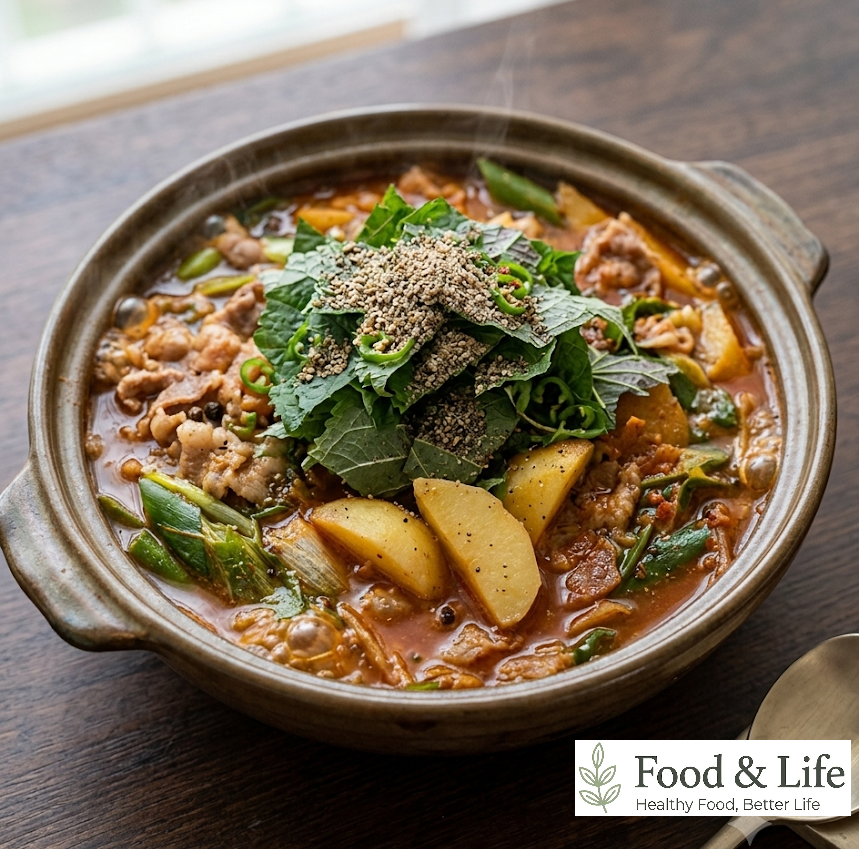
Traditional gamjatang is delicious, but the long process of simmering pork bones can make it feel like too much work for a home-cooked meal. This Daepae Samgyeopsal Gamjatang recipe, inspired by Korean chef Jung Ho-young, uses store-bought beef bone broth and thin-sliced pork belly to create a rich Korean-style stew without hours of simmering. Sour kimchi, potatoes, perilla seed powder, and perilla leaves bring the familiar savory, spicy, and nutty flavors associated with gamjatang. Enjoy a hearty pot filled with tender pork, fluffy potatoes, and a warming, deeply flavored broth.
⏱️ Cooking Time: About 20 minutes
🍳 Difficulty: ★☆☆☆☆ Easy
✓ Ingredients
🥣 Main Ingredients
- 200 g (7 oz) daepae samgyeopsal (thin-sliced pork belly)
- 1 pack store-bought beef bone broth, about 500 g (17.6 oz)
- 200 g (7 oz) sour kimchi
- 1 large potato
- 1 large green onion
- 2 Cheongyang chilies
- 10 perilla leaves
- 200 ml (6.8 fl oz) water
🧂 Sauce & Seasonings
- 1 tbsp minced garlic
- 1/2 tbsp gochujang (Korean red chili paste)
- 1 1/2 tbsp doenjang (Korean fermented soybean paste)
- 2 tbsp Korean tuna sauce
- 2 tbsp gochugaru (Korean red pepper flakes)
- 3 tbsp perilla seed powder
- 1/2 tbsp ground black pepper
(Measurement guide: 1 tbsp = 15 ml, 1 tsp = 5 ml, 1 Korean paper cup = 180 ml / 6.1 fl oz)
✓ How to Make Daepae Samgyeopsal Gamjatang
- Brown the pork belly: Add 200 g (7 oz) thin-sliced pork belly to a pot and cook until lightly golden and enough fat has rendered out. Browning the pork first allows its savory flavor to spread throughout the broth.
- Add the broth and potato: Pour in 1 pack of beef bone broth and 200 ml (6.8 fl oz) water. Add 1 large potato sliced into moderately thick, flat pieces and bring everything to a boil.
- Add the kimchi and seasonings: Cut 200 g (7 oz) sour kimchi into bite-size pieces and add it to the pot. Stir in 1 tbsp minced garlic, 1/2 tbsp gochujang, 1 1/2 tbsp doenjang, 2 tbsp Korean tuna sauce, and 2 tbsp gochugaru until the seasonings are evenly dissolved into the broth.
- Cook the potato until tender: Simmer over medium heat until the potato is soft and releases a small amount of starch into the broth.
- Add the vegetables: Once the broth has developed a rich flavor, add 1 diagonally sliced green onion and 2 sliced Cheongyang chilies for an extra spicy kick.
- Finish with perilla: Tear 10 perilla leaves into large pieces and add them along with 3 tbsp perilla seed powder and 1/2 tbsp ground black pepper. Bring the stew to one brief final simmer and remove it from the heat. Adding the perilla leaves and perilla seed powder at the end helps preserve their distinctive aroma.
✓ Key Tips for Easy Gamjatang
- Instead of simmering the thin-sliced pork belly directly in the broth, brown it first until the fat renders out. This builds a richer pork flavor even without using bones.
- Add the perilla seed powder and perilla leaves near the end of cooking and simmer only briefly. This keeps their nutty, aromatic character from fading during a long boil.
✓ Serving Tips
- If you do not have sour kimchi, lightly blanch baby napa cabbage in boiling water, squeeze out the excess moisture, and use it in place of the leafy greens traditionally served in gamjatang.
- Add ramen noodles or sujebi (Korean hand-torn dough) to the leftover broth, or turn the remaining stew into fried rice with cooked rice, shredded seaweed, and sesame oil.
- For a dipping sauce, mix Korean hot mustard and regular soy sauce in a 1:2 ratio, then dip the pork and vegetables into the sauce before eating.
✓ How to Choose Good Pork
- Check the color: Choose pork with an even pale pink to light pink color and a slight natural sheen.
- Check the fat: The fat should be white to creamy white, feel firm, and have a clear boundary between the lean meat and fat.
- Check the texture: Fresh pork should feel resilient when lightly pressed and quickly return to its original shape. Avoid packages with excessive liquid or purge.
✓ Pork Belly Nutrition per 100 g (3.5 oz)
| Nutrient | Amount per 100 g (3.5 oz) |
|---|---|
| Calories | 372.00 kcal |
| Carbohydrates | 0.00 g |
| Protein | 13.90 g |
| Fat | 33.31 g |
| Sodium | 56.00 mg |
Values are based on 100 g (3.5 oz) of raw pork belly. Actual nutrition may vary depending on breed, cut, product, and cooking method.
Source: Ministry of Food and Drug Safety (Korea) – Food Nutrition Database, Raw Ingredients
✓ Frequently Asked Questions (FAQ)
Q1. How long should I cook the potato?
Slice the potato to about 1 cm (0.4 inch) thick and simmer it over medium heat for approximately 8–10 minutes. It should be tender enough for a chopstick or fork to slide easily into the center.
Q2. What should I do if the broth becomes too thick or salty?
The beef bone broth and doenjang both contribute saltiness, and the broth can become more concentrated as it reduces. If the flavor becomes too strong, add about 1/2–1 cup water and bring the stew back to a brief simmer.
Q3. Can I use regular pork belly or pork shoulder instead of thin-sliced pork belly?
Yes. Cut thicker pork belly or pork shoulder into bite-size pieces and brown it thoroughly before adding the broth. Make sure the pork is fully cooked before continuing with the remaining ingredients.
You do not need to simmer pork bones for hours to make a satisfying Daepae Samgyeopsal Gamjatang at home. Thin-sliced pork belly and prepared beef bone broth create a rich base quickly, while perilla leaves and perilla seed powder add the nutty, aromatic character that makes this stew distinctive.
Finish the meal by adding ramen or sujebi to the remaining broth, or use the leftovers to make savory fried rice for an especially hearty meal.
If you found this recipe helpful, please bookmark it and share it with anyone who enjoys quick and easy Korean recipes.
I’ll continue sharing approachable recipes and practical cooking tips that make Korean food easier to recreate at home. 😊
If there’s a Korean dish or recipe you’d like to see next, feel free to leave a comment! 😊