
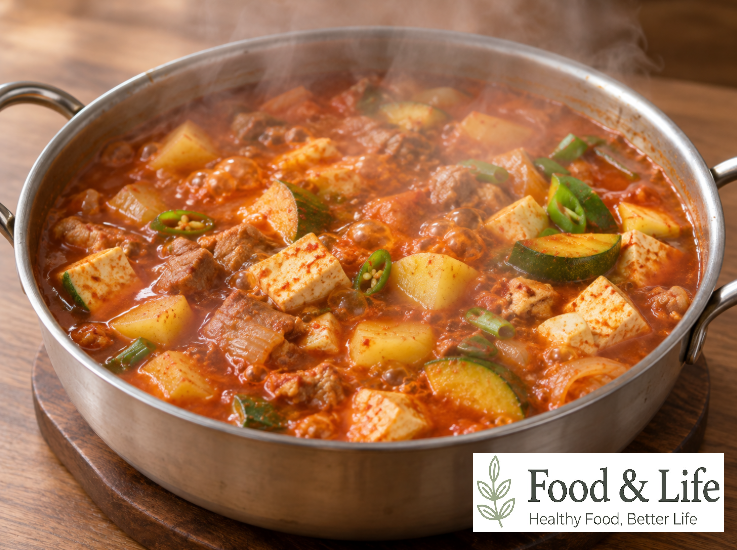
Some days, all you need is a steaming bowl of spicy stew and warm rice for a satisfying meal. This Gochujang Jjigae recipe, inspired by Korean chef Jung Ho-young, starts by sautéing green onion and garlic, then browning pork with soy sauce to build a deep savory base before adding gochujang and gochugaru for a bold, warming heat. Potatoes, Korean zucchini, onion, and tofu make the stew hearty enough to enjoy without preparing several side dishes. Serve the rich, slightly reduced broth and tender pork with plenty of hot rice for a comforting Korean-style meal.
⏱️ Cooking Time: About 25 minutes
🍳 Difficulty: ★★☆☆☆
✓ Ingredients (2–3 Servings)
🥣 Main Ingredients
- 300 g (10.6 oz) pork shoulder
- 2 potatoes
- 1 Korean zucchini
- 1 block tofu
- 1 onion
- 1 large green onion
- 3 Cheongyang chilies
- 1 tbsp minced garlic
- 1 tbsp cooking oil (or sesame oil)
- Ground black pepper, to taste
🧂 Sauce & Seasonings
- 700 ml (23.7 fl oz) water
- 4 tbsp regular soy sauce
- 3 tbsp gochujang (Korean red chili paste)
- 3 tbsp gochugaru (Korean red pepper flakes)
- 3 tbsp cooking wine
- 3 tbsp sugar
- 2 tbsp oyster sauce
(Measurement guide: 1 tbsp = 15 ml, 1 tsp = 5 ml, 1 Korean paper cup = 180 ml / 6.1 fl oz)
✓ How to Make Gochujang Jjigae
- Make the green onion oil: Add the cooking oil or sesame oil to a pot. Add the sliced green onion and minced garlic, then sauté until fragrant.
- Brown the pork: Add the pork shoulder and cook until it begins to brown. Pour in 4 tbsp soy sauce and continue sautéing so the soy sauce lightly caramelizes around the meat. This step builds a deeper savory flavor and helps reduce any strong pork aroma.
- Add water and the firm vegetables: Pour in 700 ml (23.7 fl oz) water, then add the potatoes cut into large pieces and the sliced Cheongyang chilies.
- Season the stew: Add 3 tbsp gochujang, 3 tbsp gochugaru, 3 tbsp cooking wine, 3 tbsp sugar, and 2 tbsp oyster sauce. Stir well until the gochujang is completely dissolved into the broth.
- Add the remaining vegetables and tofu: Add the onion, Korean zucchini, and tofu cut into bite-size pieces. Simmer over medium heat until everything is bubbling and cooked through.
- Finish the stew: Once the potatoes and vegetables are tender, add a pinch of ground black pepper and bring the stew to one final simmer before serving.
✓ Key Tip for Rich Gochujang Jjigae
- The most important step is to sauté the pork together with the soy sauce until it begins to caramelize against the bottom of the pot. This develops the savory depth that gives the finished stew its rich flavor.
✓ Serving Tips
- You can substitute the pork shoulder with pork belly or pork neck/shoulder steak if you prefer a richer, chewier cut.
- After the stew is cooked, add ramen noodles or sujebi (Korean hand-torn dough) and simmer until tender for an even heartier meal.
✓ How to Choose Good Pork
- Check the color: Look for pork with a light reddish-pink color and a slight sheen. Avoid meat that appears excessively pale or very dark red.
- Check the fat: The fat should look white to creamy white, feel firm, and be well attached to the meat.
- Check the texture: Fresh pork should feel resilient when lightly pressed and quickly return to its original shape. Avoid packages with excessive liquid or purge.
✓ Pork Shoulder Nutrition per 100 g (3.5 oz)
| Nutrient | Amount per 100 g (3.5 oz) |
|---|---|
| Calories | 161.00 kcal |
| Carbohydrates | 0.00 g |
| Protein | 20.56 g |
| Fat | 7.92 g |
| Sodium | 50.00 mg |
Values are based on 100 g (3.5 oz) of raw pork shoulder. Actual nutrition may vary depending on breed, cut, product, and cooking method.
Source: Ministry of Food and Drug Safety (Korea) – Food Nutrition Database, Raw Ingredients
✓ Frequently Asked Questions (FAQ)
Q1. How long should I simmer the potatoes and vegetables?
After adding the potatoes and seasonings, simmer the stew over medium heat for about 10–15 minutes. This gives the potatoes enough time to become tender and absorb the flavorful broth.
Q2. What should I do if the broth becomes too thick or salty?
Make sure the gochujang is fully dissolved so there are no thick clumps in the broth. If too much liquid evaporates and the stew becomes overly concentrated, add about 1/2 cup water and bring it back to a brief simmer.
Q3. Can I substitute beef or canned tuna for the pork shoulder?
Yes. Beef stew meat or lightly drained canned tuna can also be used with this broth. If using tuna, add it together with the vegetables so it does not break apart too much during cooking.
By browning the pork with soy sauce before simmering it with gochujang, gochugaru, and vegetables, you can make a rich and spicy Gochujang Jjigae without complicated preparation. With plenty of potatoes, tofu, pork, and vegetables in every bowl, it makes a satisfying meal even when you do not have several side dishes on the table.
Serve it piping hot with freshly cooked rice whenever you want a hearty Korean stew with a bold, savory broth.
If you found this recipe helpful, please bookmark it and share it with anyone who enjoys easy Korean home cooking.
I’ll continue sharing approachable recipes and practical cooking tips that make Korean food easier to recreate at home. 😊
If there’s a Korean dish or recipe you’d like to see next, feel free to leave a comment! 😊