
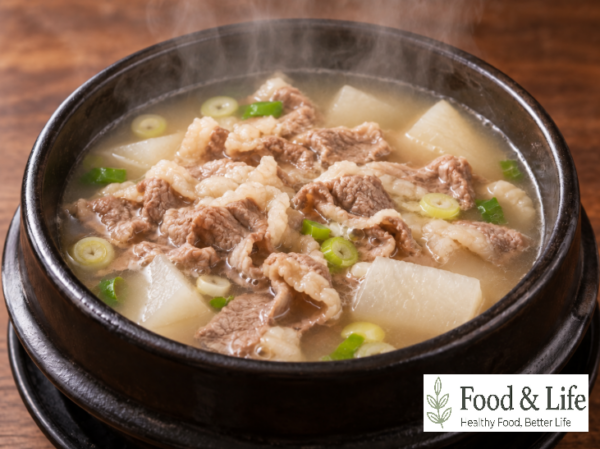
This Galbitang recipe from singer Kim Jae-joong is a quick Korean beef soup made with 450 g (15.9 oz) fresh chadolbagi instead of simmering beef short ribs for hours. The thinly sliced beef is seared first to release its fat and rich beef flavor, then cooked with Korean radish and seasonings for a deeply savory soup that comes together in about 15 minutes.
Once the chadolbagi starts releasing its fat, thinly sliced radish is stir-fried with 3 tbsp sesame oil, 1 tbsp dark soy sauce, and 1–2 tbsp tuna extract seasoning to build depth in a short amount of time. Water, minced garlic, beef Dashida, and green onion are then added and brought to a vigorous boil. Skimming off the fat, foam, and impurities that rise to the surface helps keep the broth clear while maintaining a rich beef flavor.
Because there is no need to soak beef ribs or simmer stock for hours, this recipe is an easy way to make a warm and satisfying Galbitang-style soup on a busy day.
⏱️ Cooking Time: About 15 minutes
🍳 Difficulty: ★☆☆☆☆
✓ Ingredients
🥣 Main Ingredients
- 450 g (15.9 oz) fresh chadolbagi (thinly sliced beef brisket)
- 2 pieces Korean radish, each about 4 cm thick
- 1 stalk green onion
- 1–1.5 L (33.8–50.7 fl oz) water
🧂 Seasonings & Broth
- 3 tbsp sesame oil
- 1 tbsp dark soy sauce
- 1–2 tbsp tuna extract seasoning
- 1 heaping tbsp minced garlic
- 1 heaping tbsp beef Dashida
- A little black pepper, to taste
(Measurement guide: 1 tbsp = 15 ml (0.5 fl oz), 1 tsp = 5 ml, 1 Korean paper cup = 180 ml (6.1 fl oz))
✓ How to Make Quick Galbitang with Chadolbagi
- Prepare the ingredients: Thinly slice the 2 pieces of Korean radish, each about 4 cm thick. Cut 1 stalk of green onion into large pieces.
- Sear the fresh chadolbagi: Heat a pot thoroughly, then add 450 g (15.9 oz) fresh chadolbagi. Cook over high heat until the beef begins to release its own fat.
- Stir-fry the radish and seasonings: Once the chadolbagi starts releasing fat, add 3 tbsp sesame oil, the sliced radish, 1 tbsp dark soy sauce, and 2 tbsp tuna extract seasoning. Stir-fry briefly so the seasoning coats the beef and radish evenly.
- Add water and boil: Once the beef is fully cooked, pour in 1–1.5 L (33.8–50.7 fl oz) water. Add 1 heaping tbsp minced garlic, 1 heaping tbsp beef Dashida, and the chopped green onion. Bring everything to a vigorous boil over high heat.
- Skim and finish: As the soup boils, regularly skim off the fat, foam, and impurities that rise to the surface with a spoon. Turn off the heat and finish with black pepper to taste.
✓ Key Tips for Success
- Skim off fat and impurities: Chadolbagi is naturally high in fat, so foam and rendered fat will rise to the surface as the broth boils. Skim them off regularly to keep the soup from tasting overly greasy and to maintain a cleaner, clearer broth.
- Use fresh chadolbagi and sear it first: Fresh chadolbagi releases fat and beef flavor as it sears. Cooking the radish, sesame oil, and soy sauce in that rendered fat helps create a deeper broth in a short amount of time.
✓ Serving Tips
- Add Korean glass noodles: Soak Korean glass noodles in cold water and lightly boil them first. Place the noodles in the bottom of a bowl, then pour the hot Galbitang-style broth and beef over them for a more filling, restaurant-style bowl.
- Add sliced green onion and Cheongyang chili: Top the finished soup with plenty of fresh green onion or a small amount of sliced Cheongyang chili for a clean, spicy finish that helps balance the richness of the beef.
✓ How to Choose Good Chadolbagi
- Meat color: Choose beef with a bright red color and a natural sheen on the surface.
- Fat color: The fat between the layers of meat should be clear, milky white, and slightly glossy.
- Firmness and grain: The cut surface should feel firm rather than soft, with a fine and even grain.
✓ Chadolbagi Nutrition per 100 g (3.5 oz)
| Nutrient | Amount per 100 g (3.5 oz) |
|---|---|
| Calories | 408.00 kcal |
| Carbohydrates | 0.00 g |
| Protein | 16.45 g |
| Fat | 35.94 g |
| Sodium | 66.00 mg |
Based on raw Hanwoo beef, Grade 1, brisket/chadolbagi, per 100 g. Actual nutrition values may vary depending on breed, cut, product, and preparation.
Source: Ministry of Food and Drug Safety Food Nutrition Database
✓ Frequently Asked Questions (FAQ)
Q1. Why do you sear the fresh chadolbagi first?
Searing the chadolbagi first releases its fat and beef flavor. Stir-frying it with sesame oil, radish, dark soy sauce, and tuna extract seasoning helps build a richer broth in a short amount of time.
Q2. What should I do if the Galbitang broth tastes too heavy or greasy?
If the rendered fat and impurities are not skimmed off thoroughly while the soup boils, the broth can taste heavy. Remove the foam and fat from the surface regularly with a spoon or ladle.
Q3. Can I use frozen chadolbagi instead of fresh chadolbagi?
Yes. Frozen chadolbagi can also be used, but it may release more moisture and fat while cooking. Thaw it first, pat it dry thoroughly with paper towels, and skim the broth more carefully as it cooks.
Kim Jae-joong’s chadolbagi Galbitang develops a rich beef flavor even with its short cooking time because the fresh beef is seared first. The clean flavor of thinly sliced radish blends naturally with the savory notes of tuna extract seasoning, dark soy sauce, and beef Dashida. Skimming the fat and foam as the soup boils also helps keep the broth cleaner and lighter despite the richness of the chadolbagi.
If simmering beef bones or short ribs for hours feels too time-consuming but you still want a warm, flavorful Korean beef soup at home, this easy Galbitang recipe is a practical option. Since the chadolbagi and radish are stir-fried before being quickly boiled, it works especially well for a busy evening or whenever you need a hearty bowl of soup.
Save or bookmark this recipe so you can easily find it again later, and share it with someone who enjoys Korean soups and beef dishes.
I’ll continue sharing easy-to-follow recipes and practical cooking tips. 😊
If there is a dish or recipe you would like to see next, feel free to leave a comment. 😊