
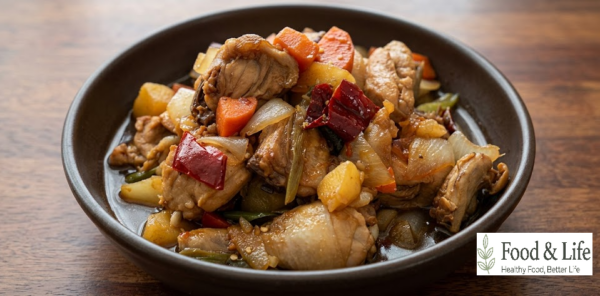
When making jjimdak at home, the key is reducing the chicken’s gamey odor while allowing the savory soy sauce seasoning to soak deeply into both the meat and potatoes.
This Korean soy sauce jjimdak recipe uses 1 whole chicken (1.2 kg / 2.6 lb), simmered with 120 ml (4.1 fl oz) cheongju and 120 ml (4.1 fl oz) cooking wine, then seasoned with soy sauce and brown sugar for a rich sweet-and-savory flavor. The wide glass noodles are removed as soon as they are properly cooked so they do not become overly soft. At the end, the remaining sauce is reduced over high heat until thick and glossy, then poured back over the chicken.
Tender chicken, fluffy potatoes, and chewy glass noodles coated in a deeply savory soy sauce make this jjimdak a satisfying main dish for a family meal.
⏱️ Cooking Time: About 40 minutes
🍳 Difficulty: ★★☆☆☆
✓ Ingredients
🥣 Main Ingredients
- 1 whole chicken (1.2 kg / 2.6 lb)
- 1 potato
- 1/2 onion
- 1/4 carrot
- 1 green onion
- 1 Cheongyang chili pepper
- 2 dried red chili peppers
- 1 handful wide glass noodles
🧂 Sauce & Seasonings
- 500 ml (16.9 fl oz) water
- 120 ml (4.1 fl oz) cheongju (Korean rice wine)
- 120 ml (4.1 fl oz) cooking wine
- 35 g (1.2 oz) brown sugar, or 35 g (1.2 oz) white sugar
- 1 tbsp minced garlic
- 70 ml (2.4 fl oz) soy sauce, either Korean dark soy sauce or brewed soy sauce
- 15 ml (0.5 fl oz) tamari soy sauce
(Measurement guide: 1 tbsp = 15 ml, 1 tsp = 5 ml, 1 Korean paper cup = 180 ml / 6.1 fl oz)
✓ How to Make Korean Soy Sauce Jjimdak
- Prepare the chicken: Remove any excess blood and thoroughly clean 1 whole chicken (1.2 kg / 2.6 lb). Place it in a deep pan and turn on the heat.
- Add the water: Pour in 500 ml (16.9 fl oz) water, enough to partially submerge the chicken.
- Add the first seasonings: Add 120 ml (4.1 fl oz) cheongju, 120 ml (4.1 fl oz) cooking wine, 35 g (1.2 oz) brown sugar or white sugar, and 1 tbsp minced garlic. Bring to a boil over high heat.
- Skim the foam: As the liquid comes to a boil, thoroughly skim off any foam and impurities that rise to the surface. This helps reduce the chicken’s gamey odor.
- Add the potato: Add the prepared potato and tuck the pieces underneath the chicken so they cook fully in the braising liquid.
- Add the soy sauce: Pour in 70 ml (2.4 fl oz) soy sauce and continue simmering so the color and seasoning penetrate the chicken evenly.
- Add the vegetables and chilies: Add 1/4 sliced carrot, 2 dried red chili peppers, and 1 Cheongyang chili pepper. Continue cooking over medium heat. If serving children or anyone sensitive to spicy food, the chilies may be omitted.
- Add the onion, green onion, and glass noodles: Once the braising liquid is simmering evenly, add 1/2 prepared onion, 1 green onion, and 1 handful of wide glass noodles that have been soaked in water beforehand. Remove the noodles once they are properly cooked and set them aside on the serving platter so they do not become overly soft.
- Add the tamari soy sauce: As the liquid reduces and begins to thicken, add 15 ml (0.5 fl oz) tamari soy sauce to deepen the color and add gloss. The tamari is mainly used for color, so it may be omitted if unavailable.
- Remove the chicken and vegetables: Once the sauce has reduced to a shallow amount, lower the heat and transfer the chicken and vegetables to the serving dish.
- Reduce the sauce and finish: Increase the heat to high and stir the remaining sauce until it becomes thick and glossy. Pour it evenly over the chicken to finish.
✓ Key Tips for Success
- Skim the foam early and control the heat: If the foam that rises after adding the cheongju and cooking wine is not removed, the chicken’s gamey aroma can remain in the sauce. Skim thoroughly, then keep the heat at medium after adding the potato so the liquid does not reduce too quickly.
- Watch the glass noodles and final sauce consistency: Wide glass noodles absorb liquid quickly. If left in the pan too long, they can become overly soft or stick to the bottom. Remove them as soon as they are cooked, then reduce only the remaining sauce over high heat and pour it over the chicken for the right concentration and glossy finish.
✓ Serving Tips
- Mix the reduced sauce with rice: Spoon the thickened soy sauce over hot rice and mash in some of the tender potato for a rich, savory-sweet combination.
- Add mushrooms if desired: Shiitake or king oyster mushrooms can be cut into large pieces and braised with the dish. Their aroma and chewy texture pair naturally with the salty-sweet soy sauce.
- Adjust the heat to your preference: Keep the Cheongyang chili and dried red chilies for a pleasantly spicy finish. For children or anyone sensitive to spice, simply leave them out for a milder sweet-and-savory jjimdak.
✓ How to Choose Good Chicken
- Skin color and appearance: Fresh chicken should have pale apricot-colored skin with a clear, natural sheen.
- Firmness of the meat: Choose chicken with plump flesh that feels springy and resilient when gently pressed.
- Chilled storage: Frozen chicken can lose moisture during thawing, which may affect the texture. When possible, choose fresh chicken that has been kept refrigerated at 5°C (41°F) or below.
Source: Rural Development Administration – Nongsaro
✓ Chicken Thigh Nutrition per 100 g (3.5 oz)
| Nutrient | Amount per 100 g (3.5 oz) |
|---|---|
| Calories | 144.00 kcal |
| Carbohydrates | 0.00 g |
| Protein | 19.41 g |
| Fat | 7.67 g |
| Sodium | 84.00 mg |
Values are based on 100 g (3.5 oz) of raw chicken thigh. Actual nutritional values may vary depending on breed, cut, product, and cooking method.
Source: Food Safety Korea – Food Nutrition Information
✓ Frequently Asked Questions (FAQ)
Q1. Do I really need to skim off the foam when the chicken starts boiling?
Yes. Removing the foam and impurities that rise to the surface helps reduce the chicken’s gamey aroma and keeps the braising liquid cleaner in flavor.
Q2. Why does the jjimdak sauce reduce too quickly or the glass noodles become mushy?
Wide glass noodles absorb liquid very quickly. Remove them as soon as they are properly cooked, then continue reducing the chicken and remaining sauce separately to preserve the noodles’ chewy texture and the right amount of sauce.
Q3. Can I replace or omit the tamari soy sauce?
Yes. The tamari is mainly used to deepen the brown color and add gloss. If you do not have it, you can simply omit it. The regular soy sauce and sugar seasoning still provide plenty of flavor.
Following this method keeps the chicken moist while allowing the soy sauce seasoning to soak deeply into both the meat and potatoes. Reducing the remaining sauce over high heat at the end gives the dish a glossy finish, while the chewy wide glass noodles and fluffy potatoes absorb the sweet-and-savory flavors beautifully.
If you’re looking for an easy way to make moist, flavorful Korean soy sauce jjimdak at home, try using the full 1.2 kg (2.6 lb) chicken and the seasoning ratios listed above. With chicken, potatoes, vegetables, and glass noodles all in one dish, it makes a hearty main course for a weekend dinner or family meal.
Save or bookmark this recipe so you can easily find it later, and share it with someone who enjoys Korean home cooking.
More approachable recipes and practical cooking tips are coming. If there is a dish or recipe you would like to see next, feel free to leave a comment. 😊