
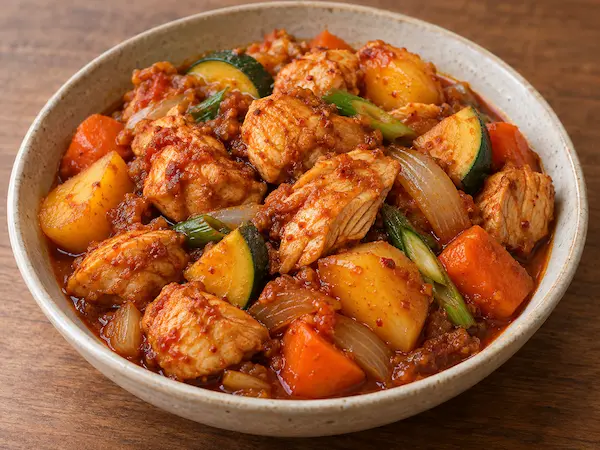
The key to making spicy braised chicken breast tender and juicy is to sauté the chicken first with minced garlic and soy sauce instead of simmering it directly in water.
In this recipe, 1 kg (2.2 lb) of chicken breast is stir-fried over high heat until the outside is coated with the soy sauce seasoning. It is then simmered with potatoes and vegetables in a sweet and spicy broth made with gochujang and gochugaru. After simmering for about 15 minutes until the potatoes are tender, the dish is cooked for another 5 minutes over medium-low heat so the sauce reduces and coats the chicken and vegetables evenly.
This Korean spicy braised chicken breast recipe is a flavorful way to turn chicken breast prepared for meal planning into a hearty dish that pairs especially well with warm rice.
⏱️ Cooking Time: About 30 minutes
🍳 Difficulty: ★★☆☆☆
✓ Ingredients
🥣 Main Ingredients
- Chicken breast 1 kg (2.2 lb)
- 2 potatoes
- 1/2 carrot
- 1 onion
- 1/2 Korean zucchini (aehobak)
- 1.5 green onions
- Water 300 ml (10.1 fl oz)
- Cooking oil
🧂 Sauce & Seasonings
- Minced garlic 1.5 tbsp
- Soy sauce 5 tbsp
- Gochugaru (Korean red pepper flakes) 3 tbsp
- Sugar 2 tbsp
- Cooking wine 3 tbsp
- Gochujang (Korean red pepper paste) 2 tbsp
- Mulyeot (Korean cooking syrup) 2 tbsp
- Ground black pepper, a little
(Measurement guide: 1 tbsp = 15 ml, 1 tsp = 5 ml, 1 Korean paper cup = 180 ml / 6.1 fl oz)
✓ How to Make Spicy Braised Chicken Breast
- Prepare the ingredients: Cut 1 kg (2.2 lb) chicken breast, 2 potatoes, and 1/2 carrot into large bite-size pieces. Thickly slice 1 onion, cut 1/2 Korean zucchini into half-moons, and slice 1.5 green onions diagonally.
- Sauté the chicken breast first: Heat a wok and add a generous amount of cooking oil. Add the chicken breast, 1.5 tbsp minced garlic, and 5 tbsp soy sauce. Stir-fry over high heat until the chicken is evenly coated with the soy sauce and the outside turns white.
- Add the water and seasonings: Pour in 300 ml (10.1 fl oz) water. Add 3 tbsp gochugaru, 2 tbsp sugar, 3 tbsp cooking wine, 2 tbsp gochujang, and 2 tbsp mulyeot. Stir thoroughly so the seasonings dissolve evenly into the broth.
- Add the vegetables and simmer: Add the prepared potatoes, carrot, onion, and Korean zucchini. Simmer for about 15 minutes, until the potatoes are tender and cooked through.
- Finish with green onions and black pepper: Once the potatoes are fully cooked, add the diagonally sliced green onions and a little black pepper. Reduce the heat to medium-low and simmer for another 5 minutes, allowing the liquid to reduce until there is just enough thick sauce left to coat the chicken and vegetables.
✓ Key Tips for Success
- Sauté the chicken with garlic and soy sauce first: If chicken breast is added directly to water and simmered from the beginning, it can lose moisture and become dry while the seasoning stays mostly on the surface. Stir-frying it first with garlic and soy sauce helps the savory seasoning coat the meat before the braising liquid is added.
- Control the heat while the vegetables cook: If the dish is kept over excessively high heat after adding the potatoes and vegetables, the liquid may reduce before the potatoes are fully cooked. Simmer for about 15 minutes until the potatoes are tender, then add the green onions and black pepper and reduce over medium-low heat for another 5 minutes for a thicker, more concentrated sauce.
✓ Serving Tips
- Mash some of the tender potatoes into the reduced sweet and spicy sauce, then mix them with the chicken breast and warm rice. It makes a hearty rice-bowl-style meal.
- After eating most of the chicken and vegetables, add cooked udon noodles or glass noodles to the remaining sauce and lightly stir-fry them for another way to enjoy the flavorful broth.
- If you prefer a sharper, spicier finish, thinly slice 1 Cheongyang chili pepper and add it with the green onions at the end.
✓ How to Choose Good Chicken Breast
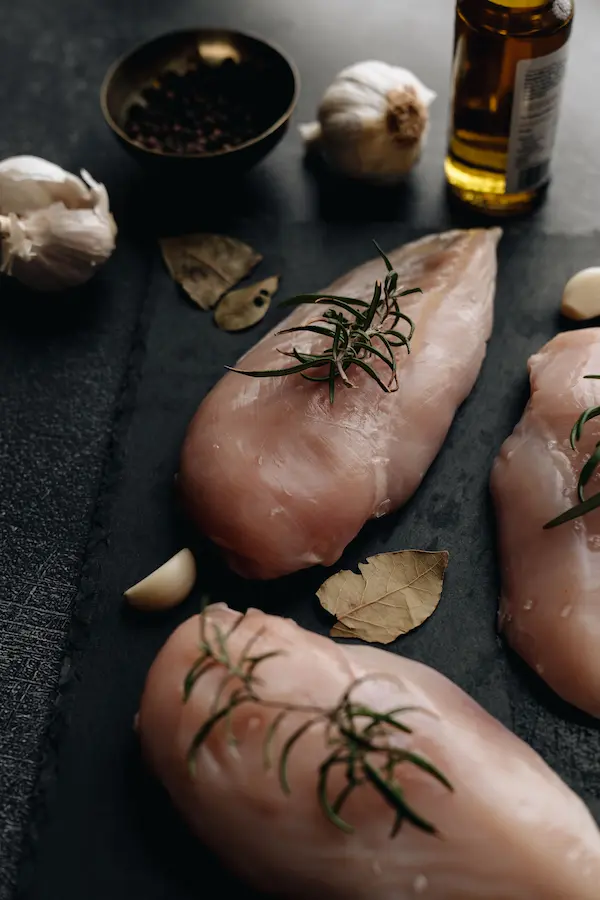
- Color and appearance: Choose chicken breast with a light pink color and a naturally moist surface that does not look dried out.
- Firmness and surface condition: Fresh chicken breast should feel firm and spring back quickly when lightly pressed. Avoid meat with a sticky surface or noticeable discoloration.
Source: Rural Development Administration – Nongsaro: How to Choose and Store Livestock Products
✓ Chicken Breast Nutrition per 100 g (3.5 oz)
| Nutrient | Amount per 100 g (3.5 oz) |
|---|---|
| Calories | 106.00 kcal |
| Carbohydrates | 0.00 g |
| Protein | 22.97 g |
| Fat | 0.97 g |
| Sodium | 45.00 mg |
Based on 100 g of raw chicken breast. Actual nutrition may vary depending on the breed, cut, product, and cooking method.
Source: Ministry of Food and Drug Safety Food Nutrition Database – Raw Food Ingredients
✓ Frequently Asked Questions (FAQ)
Q1. Why do you sauté the chicken breast with minced garlic and soy sauce first?
This gives the chicken the aroma of garlic and savory flavor of soy sauce before the braising liquid is added. Sautéing the chicken first also helps the seasoning coat the meat more evenly as it cooks.
Q2. Can I cook frozen chicken breast without thawing it first?
No. Thaw the chicken completely in the refrigerator or in cold water, then pat the surface dry with paper towels before cooking. Stir-frying it while still frozen can release a large amount of water, cause oil to splatter, dilute the sauce, and make the chicken tougher.
Sautéing the chicken breast with minced garlic and soy sauce before simmering it in the spicy broth helps it stay moist rather than becoming excessively dry. The sweet and spicy seasoning coats the chicken evenly, while the tender potatoes, sweet onion, and Korean zucchini absorb the reduced sauce and make the dish especially satisfying over warm rice.
If you have chicken breast in the refrigerator that you originally prepared for meal planning, or you are simply looking for a different way to cook it, try this spicy braised chicken breast recipe. Sautéing the chicken with soy sauce and garlic first, simmering until the potatoes are completely tender, and then reducing the broth are the key steps for a juicy texture and rich seasoning.
Save or bookmark this recipe so you can easily find it later, and share it with someone who enjoys easy Korean home cooking.
More approachable recipes and practical cooking tips will be shared regularly. 😊
If there is a dish you would like to see featured next, feel free to leave a comment. 😊
※ This recipe was prepared and written after referring to a recipe featured on the YouTube channel “Altoran – Home-Cooked Recipes”, based on the cooking process and final results.