
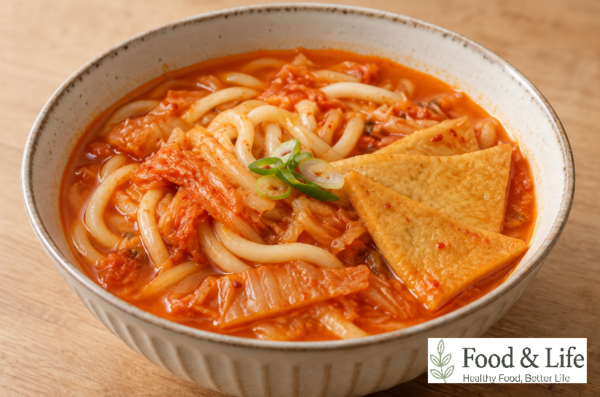
When you’re craving a hot, spicy bowl of soup, a simple yet satisfying noodle dish can be just what you need.
This kimchi udon recipe combines well-fermented sour kimchi, Korean fish cake, and a ready-made bonito-flavored noodle soup base to create a rich, savory broth in just 10 minutes. Chewy udon noodles pair perfectly with crunchy kimchi and tender fish cake, making this an easy option for lunch, dinner, or a comforting meal after a late night.
Make a warming bowl of spicy, umami-packed kimchi fish cake udon with minimal prep and ingredients.
⏱️ Cooking Time: About 10 minutes
🍳 Difficulty: ★☆☆☆☆
✓ Ingredients
🥣 Main Ingredients
- 2 leaves well-fermented napa cabbage kimchi, about 100 g (3.5 oz)
- 1 sheet Korean fish cake
- 1 pack udon noodles
- A little green onion
- 450 ml (15.2 fl oz) water
🧂 Sauce & Seasonings
- 1/2 tbsp cooking oil
- 1/2 tbsp minced garlic
- 1 tsp sugar
- 1 tbsp gochugaru (Korean red pepper flakes)
- 4–5 tbsp bonito-flavored noodle soup base
(Measurement guide: 1 tbsp = 15 ml, 1 tsp = 5 ml, 1 Korean paper cup = 180 ml / 6.1 fl oz)
✓ How to Make Kimchi Udon
- Prep the ingredients: Cut the sour kimchi into bite-size pieces. Slice the fish cake into easy-to-eat pieces and thinly slice the green onion.
- Sauté the kimchi: Heat the cooking oil in a pot. Add the kimchi, minced garlic, and sugar, then sauté over medium-low heat for about 1 minute. This helps mellow the sharp acidity of the fermented kimchi while adding a touch of sweetness to the broth.
- Make the broth: Add the water, fish cake, green onion, gochugaru, and bonito-flavored noodle soup base to the pot. Bring to a boil.
- Develop the broth: Once the broth reaches a full boil, slightly reduce the heat and cook for another 2 minutes. The fish cake releases additional savory flavor into the broth as it cooks.
- Cook the udon noodles: Add the udon noodles to the boiling broth and cook for about 2 minutes, or until the noodles loosen naturally. Avoid forcing the noodles apart with chopsticks, as they can break easily. Follow the cooking time recommended on your udon noodle package if it differs.
✓ Key Tips for Success
- Forcing the udon noodles apart too soon can make them break. Let the heat of the broth naturally loosen the noodles first, then gently stir them once they begin to separate.
✓ Serving Tips
- For extra heat, thinly slice 1 Cheongyang chili and add it during the final stage of cooking.
- Garnish with crown daisy or enoki mushrooms for extra texture and the hearty presentation of Korean-style snack shop udon.
✓ How to Choose Napa Cabbage Kimchi
- Appearance and leaves: Look for kimchi with firm white cabbage stems that have not become overly soft. The seasoning should be evenly distributed between the leaves rather than sitting only on the surface.
- Fermentation and acidity: Choose sour kimchi with a pleasantly fermented aroma and noticeable acidity, without an unpleasant stale smell.
- Texture: The leaves and stems should still have some crispness and resilience rather than feeling excessively limp or mushy.
✓ Napa Cabbage Kimchi Nutrition per 100 g (3.5 oz)
| Nutrient | Amount per 100 g (3.5 oz) |
|---|---|
| Calories | 38.00 kcal |
| Carbohydrates | 6.49 g |
| Protein | 1.98 g |
| Fat | 0.43 g |
| Sodium | 551.00 mg |
Based on 100 g (3.5 oz) of napa cabbage kimchi. Actual nutrition values may vary depending on the variety, part used, product, and preparation method.
Source: Ministry of Food and Drug Safety Food Nutrition Database – Raw Food Ingredients
✓ Frequently Asked Questions (FAQ)
Q1. Can I cook the udon noodles directly in the broth without making it cloudy?
Most packaged refrigerated or frozen Sanuki-style udon noodles have very little surface flour, so they can usually be cooked directly in the broth. If you prefer an even clearer broth, briefly blanch the noodles in a separate pot of boiling water, rinse them, and then add them to the soup.
Q2. Why does my kimchi udon broth taste too sour or slightly muddy?
If sour kimchi is cooked without enough sugar to balance its acidity, the broth can taste overly sharp. Too much kimchi seasoning or gochugaru can also make the broth taste heavy, so keep the seasonings balanced with the amount of liquid in the recipe.
With sour kimchi, fish cake, and udon noodles, you can make a hot and spicy bowl of noodles in just a few minutes. This easy kimchi udon recipe works well for a quick lunch, a cozy dinner on a chilly day, or whenever you want a warming, savory bowl of Korean-style noodles.
Save or bookmark this recipe for later, and share it with someone who enjoys Korean food.
More easy-to-follow recipes and practical cooking tips will be added regularly. 😊
If there’s a dish you’ve been curious about or a recipe you’d like to see next, feel free to leave a comment. 😊