
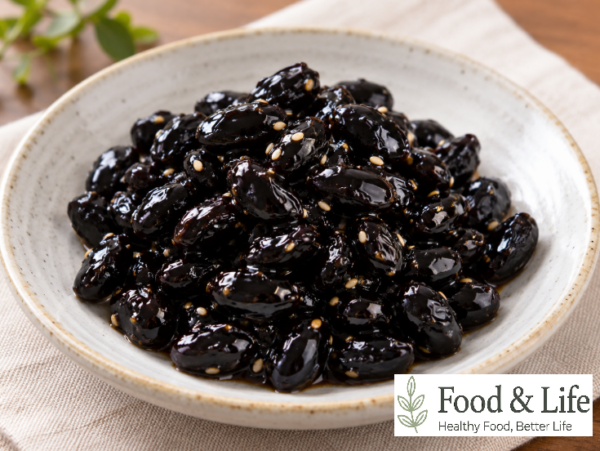
If your homemade kongjaban turns out hard or the bean skins split and peel off, the first things to check are the soaking method and when you add the seasonings.
This Seoritae Kongjaban (Korean Braised Black Beans) recipe starts by soaking the beans thoroughly in salted water, then cooking them until tender in their soaking liquid before adding the soy sauce seasoning. Adding oligosaccharide syrup and olive oil only after turning off the heat helps the beans stay glossy and moist even after they cool.
Make this soft and savory Korean side dish with a balanced combination of salty soy sauce and gentle sweetness.
⏱️ Cooking Time: About 25 minutes (excluding soaking time)
🍳 Difficulty: ★★☆☆☆
✓ Ingredients
🥣 Main Ingredients
- 200 g (7.1 oz) dried Seoritae black soybeans
- 1 L (33.8 fl oz) water
- 15 ml (1 tbsp) salt
- 1 sheet dried kelp (dashima), for the initial simmer
- 7.5 ml (1/2 tbsp) olive oil, for the initial simmer
🧂 Sauce & Seasonings
- 60 ml (2 fl oz / 4 tbsp) regular soy sauce
- 30 ml (1 fl oz / 2 tbsp) corn syrup
- 30 ml (1 fl oz / 2 tbsp) mirim
- 30 ml (1 fl oz / 2 tbsp) oligosaccharide syrup, for finishing
- 7.5 ml (1/2 tbsp) olive oil, for finishing
- Sesame seeds, a small amount
(Measurement guide: 1 tbsp = 15 ml, 1 tsp = 5 ml, 1 Korean paper cup = 180 ml / 6.1 fl oz)
✓ How to Make Seoritae Kongjaban
- Wash the beans: Place 200 g (7.1 oz) dried Seoritae black soybeans in a bowl. Rub them firmly between your hands and rinse thoroughly with water 2–3 times.
- Soak in salted water: Dissolve 15 ml (1 tbsp) salt in 1 L (33.8 fl oz) water. Add the washed Seoritae and soak for 5–8 hours. Soaking the beans in salted water helps keep the skins from peeling easily and allows moisture to penetrate the beans more evenly.
- Cook the beans first: Transfer the soaked beans to a pot and pour in enough of the bean-soaking liquid to just cover them. Add 1 sheet of dried kelp and 7.5 ml (1/2 tbsp) olive oil. Bring to a boil over high heat, then simmer for about 10 minutes until most of the liquid has evaporated.
- Add the seasoning: When about 50 ml (1.7 fl oz) of soaking liquid remains at the bottom of the pot, remove the kelp. Add 60 ml (4 tbsp) soy sauce, 30 ml (2 tbsp) corn syrup, and 30 ml (2 tbsp) mirim. Simmer for about 3 minutes, stirring with a spatula to prevent burning, until the soy sauce seasoning coats the beans evenly and the remaining liquid thickens.
- Finish for a glossy texture: Turn off the heat. Add 30 ml (2 tbsp) oligosaccharide syrup, 7.5 ml (1/2 tbsp) olive oil, and sesame seeds. Mix evenly to give the beans a glossy finish.
✓ Key Tips for Success
- Use the soaking liquid and cook the beans before seasoning: If the beans are cooked with soy sauce from the beginning, moisture can be drawn out and the beans may become firm. First cook the beans thoroughly with only the soaking liquid, dried kelp, and olive oil until they are tender, then add the soy sauce seasoning.
- Add the oligosaccharide syrup and oil at the end: Cooking oligosaccharide syrup for too long can cause the kongjaban to become firm as it cools. Turn off the heat first, then mix in the oligosaccharide syrup and olive oil using the residual heat to help maintain a moist, soft texture and glossy finish.
✓ Serving Tips
- Serve the kongjaban over warm steamed rice with a sprinkle of roasted seaweed flakes for a savory, nutty combination.
- Instead of serving a large portion at once, store the kongjaban in an airtight container in the refrigerator and take out only as much as you need for each meal. This helps preserve its glossy appearance and flavor.
✓ How to Choose Good Seoritae Black Soybeans
- Appearance and skin: Look for large, evenly sized beans without cracks or surface damage. Good Seoritae should have a deep black outer skin with a natural whitish powdery coating on the surface.
- Check the inside color: When the black skin is gently peeled back, Seoritae should have a deep green interior, which is characteristic of this variety.
✓ Seoritae Black Soybean Nutrition per 100 g (3.5 oz)
| Nutrient | Amount per 100 g (3.5 oz) |
|---|---|
| Calories | 401.00 kcal |
| Carbohydrates | 33.43 g |
| Protein | 38.02 g |
| Fat | 13.35 g |
| Sodium | 1.00 mg |
Based on dried Seoritae soybeans per 100 g (3.5 oz). Actual nutrition values may vary depending on variety, part used, product, and cooking method.
Source: Ministry of Food and Drug Safety Food Nutrition Database – Raw Food Ingredients
✓ Frequently Asked Questions (FAQ)
Q1. Do I need to add salt when soaking Seoritae black soybeans?
Soaking the beans with 15 ml (1 tbsp) salt helps them absorb moisture evenly and reduces the chance of the skins splitting or peeling. It also lightly seasons the beans before cooking.
Q2. Why does kongjaban become hard after it cools?
The beans can become firm if soy sauce and corn syrup are added from the beginning or if the oligosaccharide syrup is heated for too long. Cook the beans until tender in their soaking liquid first, add the soy sauce seasoning afterward, and mix in the oligosaccharide syrup only after turning off the heat.
Q3. Can I use the bean-soaking liquid instead of throwing it away?
Yes. The soaking liquid contains color and flavor released from the Seoritae, so this recipe uses it as the cooking liquid. Keeping the soaking liquid also helps produce darker, glossier kongjaban.
After soaking the Seoritae thoroughly and cooking the beans until tender in their soaking liquid before adding the soy sauce seasoning, the beans turned out moist and soft inside rather than hard. The salty soy sauce and gentle sweetness coated the beans evenly, while the oligosaccharide syrup and olive oil added at the end gave them an appetizing glossy finish.
I usually find firm kongjaban less appealing, but this version stayed pleasantly soft while still retaining the distinctive nutty flavor of Seoritae. My family also enjoyed it as a side dish because the beans were moist without tasting overly sweet or salty.
If you need a dependable Korean side dish that you can keep in the refrigerator and serve with meals, try this Seoritae Kongjaban recipe while following the soaking time and seasoning order carefully. If you prefer soft, moist braised black beans instead of a firm texture, this is a useful recipe to keep on hand.
Save or bookmark this recipe for later, and share it with someone who enjoys Korean home cooking.
I’ll continue sharing approachable recipes and practical cooking tips that are easy to follow at home. 😊
If there is a dish you have been curious about or a recipe you would like to see next, feel free to leave a comment. 😊