
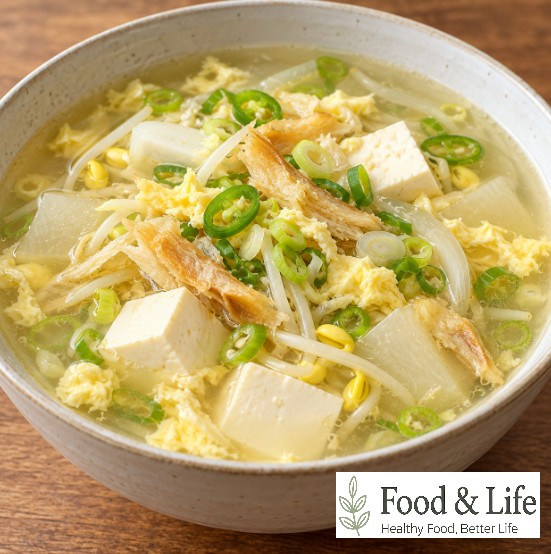
The key to making Hwangtae-guk (Korean dried pollock soup) is to lightly rinse 90 g (3.2 oz) of shredded hwangtae, then sauté it over medium heat with 1 tbsp neutral cooking oil and 2 tbsp sesame oil. Adding 2 L (67.6 fl oz) of water afterward and simmering it thoroughly helps create the soup’s signature pale, rich broth.
Simmering the hwangtae with 350 g (12.3 oz) Korean radish, 2 tbsp soup soy sauce, 4 tbsp tuna extract seasoning, and 1 tbsp minced garlic for about 20 minutes draws out the savory flavor of the dried pollock and the clean, refreshing taste of the radish. Add soybean sprouts, tofu, and eggs, then finish with Cheongyang chili peppers for a pleasantly spicy Hwangtae Haejangguk, a hearty Korean soup that works especially well for breakfast or whenever you want a warm, comforting meal.
The chewy dried pollock, crunchy soybean sprouts, and soft tofu make every spoonful satisfying, with plenty of both broth and hearty ingredients.
⏱️ Cooking Time: About 30 minutes
🍳 Difficulty: ★★☆☆☆
✓ Ingredients
🥣 Main Ingredients
- 90 g (3.2 oz) shredded hwangtae (dried pollock)
- 2 L (67.6 fl oz) water
- 1/3 Korean radish, about 350 g (12.3 oz)
- 1/2 onion
- 150 g (5.3 oz) soybean sprouts
- 2 Cheongyang chili peppers
- 1/2 block tofu, 150 g (5.3 oz)
- 2 eggs
- 1 piece of the white part of a large green onion
🧂 Seasonings & Sauces
- 1 tbsp neutral cooking oil
- 2 tbsp sesame oil
- 1 tbsp minced garlic
- 2 tbsp guk-ganjang (Korean soup soy sauce)
- 4 tbsp tuna extract seasoning
(Measurement guide: 1 tbsp = 15 ml, 1 tsp = 5 ml, 1 Korean paper cup = 180 ml)
✓ How to Make Hwangtae-Guk
- Prepare and rinse the hwangtae: Cut 90 g (3.2 oz) of shredded hwangtae into bite-size pieces. Place it in a strainer and rinse it briefly under running water, then drain. Do not soak it in water for a long time, as too much of its flavor can leach out and leave the soup tasting bland.
- Sauté the hwangtae: Add 1 tbsp neutral cooking oil and 2 tbsp sesame oil to a pot. Gently sauté the prepared hwangtae over medium heat. As the oil and proteins combine, they help create the pale, rich broth characteristic of this soup.
- Add the water, radish, and seasonings: Pour 2 L (67.6 fl oz) of water over the sautéed hwangtae. Add 1/3 sliced Korean radish, 2 tbsp soup soy sauce, 4 tbsp tuna extract seasoning, and 1 tbsp minced garlic. Bring to a vigorous boil over high heat, then reduce to medium heat and simmer for about 20 minutes.
- Add the onion and soybean sprouts: Once the broth has turned pale and flavorful, add 1/2 sliced onion and 150 g (5.3 oz) soybean sprouts. Bring the soup back to a boil.
- Add the Cheongyang peppers, tofu, and eggs: Add 2 sliced Cheongyang chili peppers and 150 g (5.3 oz) cubed tofu. Slowly pour in 2 beaten eggs. Do not stir immediately after adding the eggs. Let them set into soft curds first, then gently stir so the broth stays cleaner and does not become overly cloudy.
- Season and finish with green onion: Taste the broth and add salt if needed. Finish with the sliced white part of the green onion, bring the soup to one final boil, and serve.
✓ Key Tips for Success
- Control the moisture and sauté the hwangtae properly: If hwangtae is soaked in water for too long, much of its savory flavor can wash away and the broth may taste bland. On the other hand, sautéing it completely dry can cause it to absorb the oil quickly and burn. Rinse it briefly in a strainer, then gently sauté it over medium heat with 1 tbsp neutral oil and 2 tbsp sesame oil. This helps the oil and proteins emulsify and creates the signature pale broth.
- Wait before stirring the eggs: If you stir the beaten eggs immediately after pouring them into the soup, they can break into tiny pieces throughout the broth, making it cloudy and slightly heavy. Wait until the eggs form soft curds and float toward the surface, then stir gently to keep the soup clean and light.
✓ Serving Tips
- Serve with well-fermented baechu kimchi or kkakdugi. Their bold flavor pairs well with the mild, savory broth of Hwangtae-guk.
- If serving this soup to children, simply leave out the Cheongyang chili peppers for a milder, gentler flavor.
- Add cooked rice directly to the soup and enjoy it gukbap-style. The rice absorbs the broth while the soft tofu and crunchy soybean sprouts add contrasting textures.
✓ How to Choose Good Hwangtae
- Color and appearance: Look for pieces with an overall light yellow color and a slight sheen.
- Thickness and texture: Good hwangtae should not be so dry that it crumbles easily. Choose pieces that are relatively thick and tear softly along the grain for a better texture after cooking.
- Aroma: Avoid products with a rancid or musty smell. Good hwangtae should have a mild, savory aroma typical of properly dried fish.
✓ Hwangtae Nutrition per 100 g (3.5 oz)
| Nutrient | Amount per 100 g (3.5 oz) |
|---|---|
| Calories | 342.00 kcal |
| Carbohydrates | 0.00 g |
| Protein | 77.03 g |
| Fat | 1.75 g |
| Sodium | 555.00 mg |
Based on 100 g of shredded hwangtae. Actual nutrition values may vary depending on the variety, cut, product, and cooking method.
Source: Ministry of Food and Drug Safety Food Nutrition Database
✓ Frequently Asked Questions (FAQ)
Q1. Why isn’t my Hwangtae-guk broth turning pale and milky?
The hwangtae may not have been sautéed long enough with the oil, or the soup may not have simmered long enough after adding the water. Sauté the hwangtae with neutral cooking oil and sesame oil over medium heat, then add the water and simmer for about 20 minutes to develop the pale broth.
Q2. Why does my Hwangtae-guk taste bitter?
The heat was probably too high while sautéing the hwangtae, causing the surface of the dried fish to burn. Keep the heat at medium and stir gently, cooking only until the hwangtae begins to curl slightly.
Q3. Can I make Hwangtae-guk without Cheongyang chili peppers?
Yes. Simply leave them out if you prefer a mild soup or are serving it to children. The rest of the recipe can be prepared the same way.
Following the recipe in order—sautéing the hwangtae in neutral oil and sesame oil over medium heat, then simmering it with radish and seasonings for 20 minutes—brings out the dried pollock’s deep savory flavor and creates a rich, pale broth. The tender radish adds a clean taste, while crunchy soybean sprouts, soft tofu, and spicy Cheongyang peppers keep the soup flavorful without making it feel heavy.
Served with rice, the chewy hwangtae and fluffy egg curds make this soup especially satisfying for breakfast. You can also add the rice directly to the broth for a comforting Korean-style soup-and-rice meal.
If you’re looking for an easy Hwangtae-guk recipe with a rich, milky broth, make sure to sauté the dried pollock first and simmer it with the radish for a full 20 minutes. It is a practical one-pot recipe for days when you want a warm Korean breakfast soup or a pleasantly spicy Hwangtae Haejangguk.
Save or bookmark this recipe so you can easily find it again, and share it with someone who enjoys Korean food.
I’ll continue sharing easy-to-follow recipes and practical cooking tips. 😊
If there’s a dish you’d like to see next, feel free to leave a comment. 😊