
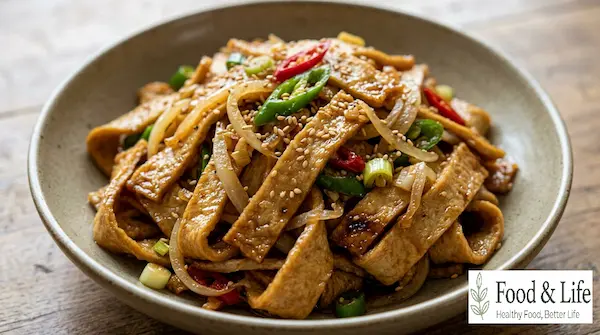
One of the biggest challenges with stir-fried fish cakes is keeping them soft and tender after they cool down or have been stored in the refrigerator. They may taste perfectly tender right out of the pan, but they can become firm and rubbery over time.
The secret to making Korean stir-fried fish cakes (Eomuk Bokkeum) that stay moist is to simmer 300 g (10.6 oz) of fish cakes with 90 ml (3 fl oz) of water and a savory soy sauce mixture, then finish with Korean starch syrup and sesame oil after turning off the heat.
Sautéing the onion first brings out its natural sweetness, while 2 tablespoons of soy sauce and 1 tablespoon of Korean tuna extract add a rich umami flavor. This easy Korean side dish takes about 15 minutes to prepare and delivers a delicious balance of sweet and savory flavors.
The fish cakes absorb the flavorful sauce while maintaining a pleasantly chewy yet tender texture. Served alongside a bowl of warm rice, they make a simple and satisfying addition to any meal.
⏱️ Cooking Time: Approximately 15 minutes
🍳 Difficulty: ★☆☆☆☆
✓ Ingredients
🥣 Main Ingredients
- 300 g (10.6 oz) Korean fish cakes (eomuk)
- 1/2 onion (120 g / 4.2 oz)
- 1 Cheongyang chili pepper (10 g)
- 1 red chili pepper (20 g)
- 1/2 large green onion (50 g / 1.8 oz)
🧂 Sauce & Seasonings
- 3 tbsp cooking oil
- 3 tbsp Mirim (Korean cooking wine)
- 2 tbsp regular soy sauce
- 1 tbsp Korean tuna extract (tuna seasoning sauce)
- 1 tbsp sugar
- 1 tbsp minced garlic
- A pinch of black pepper
- 90 ml (3 fl oz) water (1/2 Korean paper cup)
- 1 tbsp Korean starch syrup (mullyeot)
- 1 tbsp sesame oil
- 1 tbsp sesame seeds
Measurement Guide: 1 tbsp = 15 ml (0.5 fl oz), 1 tsp = 5 ml, and 1 Korean paper cup = 180 ml (6.1 fl oz).
✓ How to Make Korean Stir-Fried Fish Cakes (Eomuk Bokkeum)
- Prepare the Ingredients: Cut 300 g (10.6 oz) of Korean fish cakes into long, bite-sized strips that are easy to pick up with chopsticks. Thinly slice 1/2 onion (120 g / 4.2 oz) along the grain. Cut 1 Cheongyang chili pepper (10 g) and 1 red chili pepper (20 g) diagonally into long slices. Finely chop 1/2 large green onion (50 g / 1.8 oz) and set everything aside.
- Sauté the Onion First: Heat 3 tablespoons of cooking oil in a skillet and add the sliced onion. Sauté until the onion becomes translucent and releases its natural sweetness. Cooking the onion first creates a flavorful base for the fish cakes.
- Stir-Fry the Fish Cakes with Mirim: Add the prepared fish cakes and 3 tablespoons of Mirim to the skillet. Continue stir-frying until the fish cakes develop a light golden color on the surface. This helps reduce any strong fishy aroma while maintaining their pleasantly chewy texture.
- Add the Seasonings and Water: Pour in 2 tablespoons of regular soy sauce, 1 tablespoon of Korean tuna extract, 1 tablespoon of sugar, and 1 tablespoon of minced garlic. Add a pinch of black pepper, the sliced Cheongyang chili pepper, red chili pepper, and 90 ml (3 fl oz) of water. Stir thoroughly and continue cooking, allowing the liquid and seasonings to soak into the fish cakes. The added moisture helps keep them tender even after cooling.
- Mix in the Green Onion: Once the liquid has reduced to the desired consistency, add the chopped green onion. Stir gently until the green onion is evenly distributed throughout the fish cakes and sauce.
- Turn Off the Heat and Finish: Turn off the heat completely. Add 1 tablespoon of Korean starch syrup, 1 tablespoon of sesame oil, and 1 tablespoon of sesame seeds. Toss everything together using the residual heat until the fish cakes are evenly coated. The finished dish should have a glossy appearance, a savory aroma, and a moist, tender texture.
✓ Key Tips for Success
- Add Water to Keep the Fish Cakes Moist: Fish cakes naturally lose moisture as they cook, which can make them firm and tough after cooling. Adding 90 ml (3 fl oz) of water during cooking allows them to absorb moisture while the sauce reduces. This step is essential for achieving fish cakes that remain soft and pleasantly chewy rather than dry and rubbery.
- Add the Starch Syrup After Turning Off the Heat: Adding Korean starch syrup while the skillet is still heating can cause the sugars to overcook, burn, or become sticky and firm as they cool. Always turn off the heat completely before adding 1 tablespoon of starch syrup and 1 tablespoon of sesame oil. Mixing them in with the residual heat helps preserve the dish’s glossy coating and tender texture.
✓ Serving Tips
- Use as a Kimbap Filling or Rice Bowl Topping: The long strips of stir-fried fish cakes work well as a filling for kimbap (Korean seaweed rice rolls). You can also serve them over warm rice with a fried egg to make a simple Korean fish cake rice bowl.
- Make a Mild Version for Kids: If you’re preparing this dish for children or anyone sensitive to spicy food, omit the Cheongyang chili pepper. Instead, add thinly sliced bell peppers or carrots for a colorful, sweet, and savory version without the heat.
✓ How to Choose Good Korean Fish Cakes (Eomuk)
- Check the Fish Content: Look at the ingredient list on the package and choose fish cakes with a relatively high percentage of fish meat or surimi (processed fish paste). Fish cakes with a higher fish content generally maintain a firmer, chewier texture during cooking rather than becoming overly soft or mushy.
- Examine the Appearance and Texture: Good-quality fish cakes should have a relatively smooth surface without excessive oil or moisture. They should feel springy and firm when gently pressed and have a consistent, natural-looking color.
- Inspect the Packaging and Storage Conditions: Choose properly sealed packages without signs of damage or air entering the package. When purchasing refrigerated fish cakes, make sure they have been stored under appropriate refrigerated conditions.
✓ Korean Fish Cake Nutrition per 100 g (3.5 oz)
| Nutrient | Amount per 100 g |
|---|---|
| Calories | 169.00 kcal |
| Carbohydrates | 20.69 g |
| Protein | 11.44 g |
| Fat | 4.49 g |
| Sodium | 699.00 mg |
Note: These nutritional values are based on 100 g of Korean fish cakes, not the finished stir-fried dish. Actual nutritional content may vary depending on the type of fish cake, ingredients, brand, and cooking method.
Source: Ministry of Food and Drug Safety (MFDS) – Food Nutrition Database
✓ Frequently Asked Questions (FAQ)
Q1. Why do you add 90 ml (3 fl oz) of water when stir-frying Korean fish cakes?
Adding water helps the fish cakes absorb moisture and remain tender throughout the cooking process. Without it, cooking the fish cakes in oil alone can cause them to dry out quickly and become tough once they cool.
Q2. Why do Korean stir-fried fish cakes become hard after cooling or refrigeration?
Fish cakes can become firm when they lose too much moisture during cooking or when starch syrup is overheated and hardens as it cools. To help prevent this, simmer the fish cakes with water and add the starch syrup and sesame oil only after turning off the heat.
Q3. Can I substitute Korean tuna extract in this fish cake recipe?
Yes. You can replace 1 tablespoon of Korean tuna extract with 1 tablespoon of brewed soy sauce or 1 tablespoon of oyster sauce. However, Korean tuna extract provides a particularly clean, savory umami flavor that complements the fish cakes without making the seasoning taste too heavy.
Korean stir-fried fish cakes with soy sauce offer a delicious combination of sweet, salty, and savory flavors. The soy sauce provides a rich, salty base, while Korean tuna extract adds an extra layer of umami. Sautéed onions contribute a gentle natural sweetness, and the Cheongyang and red chili peppers add a pleasant touch of heat and color.
What makes this recipe especially appealing is the texture. By simmering the fish cakes with 90 ml (3 fl oz) of water, they retain their satisfying chewiness on the outside while becoming soft and moist inside. The Korean starch syrup added after cooking gives the fish cakes a delicate glossy coating, while sesame oil and sesame seeds contribute a rich, nutty aroma. The balanced sweet and savory sauce makes this dish an excellent companion to freshly steamed white rice.
I’ve often found that refrigerated stir-fried fish cakes become disappointingly firm, so I particularly appreciated the technique of simmering them with water in this recipe. The cooking process is straightforward: sauté the onion, stir-fry the fish cakes with Mirim, and let everything simmer in the soy sauce mixture. It’s simple enough for a busy weeknight and doesn’t require complicated preparation.
When I served the freshly cooked fish cakes with warm rice, the combination of tender fish cakes and sweet onions was even more satisfying than expected. My family especially enjoyed the moist, chewy texture and the way the sweet and savory sauce complemented the rice. I also liked how the gentle heat from the Cheongyang chili pepper balanced the sweetness, keeping the flavors from becoming too rich. Even after refrigerating the leftovers overnight, the fish cakes maintained a relatively soft texture, making this a useful make-ahead Korean side dish.
If you’ve struggled with soy sauce stir-fried fish cakes turning hard after cooling, try simmering them with 90 ml (3 fl oz) of water and finishing with Korean starch syrup and sesame oil after turning off the heat. This simple technique makes a noticeable difference in their texture, and the entire dish takes only about 15 minutes to prepare.
Whether you’re putting together a quick weeknight dinner, preparing Korean side dishes for your family, or looking for an easy addition to your weekly meal prep, this recipe is a practical option.
If you found this recipe helpful, save or bookmark it for later and share it with someone who enjoys Korean home cooking. Your support helps me continue sharing easy, approachable recipes and useful cooking tips.
I’ll keep sharing delicious recipes that anyone can follow at home. 😊
Have a dish you’d like to learn how to make or a recipe you’d love to see next? Feel free to leave a comment and share your suggestions! 😊
Recipe Note: This recipe was inspired by a dish featured on the YouTube channel “츄츄의 한끼식사.” I prepared and tested it myself, and this article is based on my own cooking process and results.