
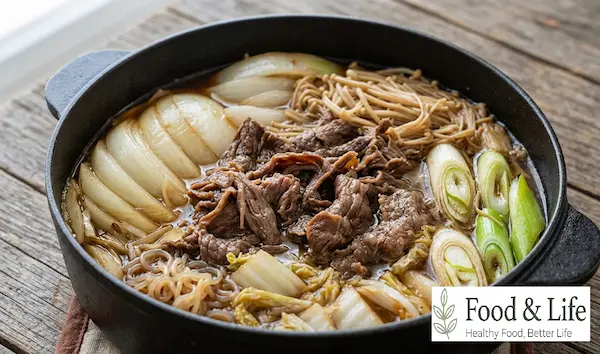
If you want to make a simple Japanese hot pot at home with a sweet and savory flavor, this easy sukiyaki recipe based on Chef Jeong Ho-young’s method is a great option.
The sukiyaki sauce is made with 6 tbsp soy sauce, 4 tbsp cooking wine, 4 tbsp brown sugar, and 500 ml (16.9 fl oz) water, so there is no need to prepare a separate broth. Napa cabbage, enoki mushrooms, tofu, glass noodles, and the other vegetables are cooked first, then 300 g (10.6 oz) thinly sliced shabu-shabu beef is added one slice at a time at the end to keep it tender.
Dip the cooked beef and vegetables into lightly beaten egg for the classic combination of sweet-savory sukiyaki broth and rich, smooth egg.
⏱️ Cooking Time: About 15 minutes
🍳 Difficulty: ★☆☆☆☆
✓ Ingredients
🥣 Main Ingredients
- 300 g (10.6 oz) thinly sliced beef for shabu-shabu
- 3–4 leaves baby napa cabbage
- 1 pack enoki mushrooms
- 1 green onion
- 1/2 onion
- 1/2 block tofu
- 1 handful soaked glass noodles
- 1 handful julienned burdock root
- 2–3 eggs
🧂 Sauce & Seasonings
- 6 tbsp soy sauce
- 4 tbsp cooking wine
- 4 tbsp brown sugar
- 500 ml (16.9 fl oz) water
Measurement guide: 1 tbsp = 15 ml, 1 tsp = 5 ml, 1 Korean paper cup = 180 ml (6.1 fl oz)
✓ How to Make Sukiyaki
- Make the sukiyaki sauce: Add 6 tbsp soy sauce, 4 tbsp cooking wine, 4 tbsp brown sugar, and 500 ml (16.9 fl oz) water to a pot or bowl. Stir well until the brown sugar dissolves.
- Char the tofu: Cut the tofu into large pieces and lightly char the outside with a kitchen torch. Searing the surface helps the tofu hold its shape during cooking and adds a subtle smoky aroma.
- Add the vegetables and glass noodles: Pour the prepared sauce into a hot pot. Arrange 3–4 leaves of prepared baby napa cabbage, 1/2 onion, 1 green onion, 1 pack enoki mushrooms, 1 handful julienned burdock root, 1/2 block charred tofu, and 1 handful soaked glass noodles neatly in the pot. Place over heat and bring to a simmer.
- Add the beef: Once the broth is simmering and the vegetables have softened slightly, pat the 300 g (10.6 oz) shabu-shabu beef with paper towels to remove excess moisture. Add the slices one at a time without overlapping and cook gently in the broth.
- Skim the surface: As the beef cooks, use a spoon to remove any foam and impurities that rise to the surface. Skimming helps keep the broth from becoming overly cloudy.
- Prepare the eggs: Crack 2–3 eggs into individual bowls and beat them lightly for dipping the cooked sukiyaki ingredients.
- Finish and serve: Once the beef is tender and cooked through, reduce the heat. Remove the beef, vegetables, and glass noodles from the pot and dip them into the beaten egg as you eat.
✓ Key Tips for Success
- Do not overcook the beef: Thinly sliced shabu-shabu beef can become tough if it cooks for too long. Add the slices individually after the broth comes to a simmer and cook only until the red color disappears.
- Skim the foam as soon as it appears: Foam and impurities released from the beef can make the broth look cloudy and taste less clean. Skim the surface carefully after adding the meat.
✓ Serving Tips
- Use charred green onion: Before adding the green onion to the pot, lightly char the surface in a dry skillet or with a kitchen torch to add a roasted aroma.
- Add shiitake mushrooms: If you have shiitake mushrooms, score a cross into the caps and cook them with the other ingredients. They add mushroom aroma while making the hot pot look more abundant.
- Finish with udon noodles: After eating the meat and vegetables, add udon noodles to the remaining broth and cook them for a satisfying final course.
✓ How to Choose Good Enoki Mushrooms
- Color and overall appearance: Look for enoki mushrooms that are white to creamy in color, with a fresh appearance and neatly clustered stems.
- Caps and stems: Choose mushrooms with small, even caps and firm stems. Extremely thin stems may indicate reduced freshness.
- Base and moisture level: Avoid packages with a base that has turned dark brown or mushrooms that appear excessively wet. Also check that there is not excessive aerial mycelium growing inside the package.
Source: Food Information Nuri – Seasonal Food Information: Enoki Mushrooms
✓ Enoki Mushroom Nutrition per 100 g (3.5 oz)
| Nutrient | Amount per 100 g (3.5 oz) |
|---|---|
| Calories | 21.00 kcal |
| Carbohydrates | 7.08 g |
| Protein | 2.48 g |
| Fat | 0.52 g |
| Sodium | 3.00 mg |
Based on 100 g of raw enoki mushrooms. Actual nutrition may vary depending on variety, product, and cooking method.
Source: Ministry of Food and Drug Safety Food Nutrition Database – Raw Food Ingredients
✓ Frequently Asked Questions (FAQ)
Q1. When should I add the beef to sukiyaki?
Add the beef after the vegetables have softened slightly. Instead of adding all 300 g (10.6 oz) at once, lay the thin slices into the simmering broth one at a time so they stay tender.
Q2. Why does my sukiyaki broth become cloudy?
Foam and impurities released as the beef cooks can make the broth look cloudy. Skim off the foam as soon as it rises to the surface for a cleaner-tasting broth.
This sukiyaki combines thinly sliced beef, baby napa cabbage, and enoki mushrooms with a sweet-savory sauce made from soy sauce, cooking wine, and brown sugar.
Cooking the vegetables first and adding the thinly sliced beef at the end helps keep the meat tender. Dipping the cooked beef and vegetables into lightly beaten egg adds a rich, smooth finish that pairs well with the sweet and savory broth.
Because there is no need to prepare a separate stock, this easy sukiyaki recipe comes together in about 15 minutes. It is a practical choice when you want a warm Japanese-style hot pot for dinner without a lengthy cooking process.
Save or bookmark this recipe so you can easily find it later, and share it with someone who enjoys Japanese food.
More easy-to-follow recipes and practical cooking tips are coming soon. 😊
If there is a dish you would like to see featured, feel free to leave a comment. 😊