
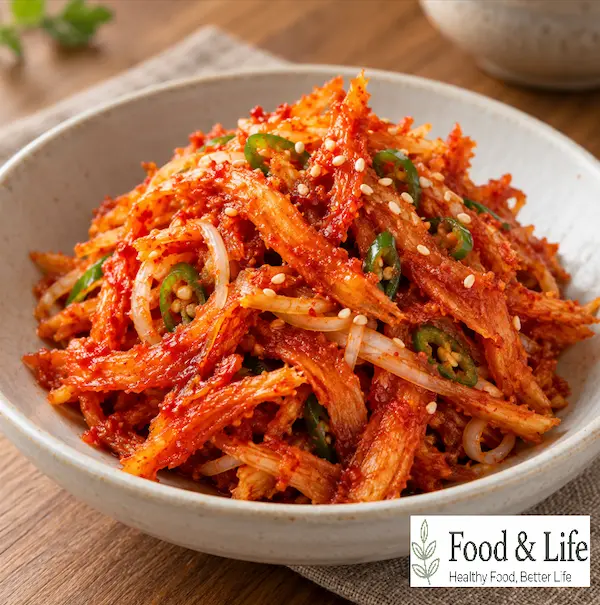
The key to making tender, moist Bugeochae Muchim (Korean spicy seasoned dried pollock strips) is to briefly wet the dried pollock instead of soaking it for a long time, then season it first with fresh pear juice and soy sauce.
Tossing 180 g (6.3 oz) of dried pollock strips with juice from 1/2 a pear and 1 tbsp soy sauce adds moisture to the naturally firm dried fish while preserving its pleasantly chewy texture. For even seasoning, mix 4 tbsp gochujang, 2 tbsp gochugaru, 1 tbsp maesil extract, 3 tbsp oligosaccharide syrup, and 1 tbsp minced garlic in a separate bowl before adding it to the pollock.
In about 15 minutes, you can make a flavorful Korean side dish with the gentle sweetness of pear and a spicy-sweet gochujang sauce.
⏱️ Cooking Time: About 15 minutes
🍳 Difficulty: ★★☆☆☆
✓ Ingredients
🥣 Main Ingredients
- 180 g (6.3 oz) dried pollock strips (bugeochae)
- 1/2 pear
- 2 Cheongyang chili peppers
- 1 white part of a green onion
🧂 Sauce & Seasonings
- 1 tbsp soy sauce, for seasoning the dried pollock
- 4 tbsp gochujang (Korean chili paste)
- 2 tbsp gochugaru (Korean red pepper flakes)
- 1 tbsp maesil extract (Korean green plum extract)
- 3 tbsp oligosaccharide syrup
- 1 tbsp minced garlic
- 1 tbsp sesame oil
- Sesame seeds, as needed
(Measurement guide: 1 tbsp = 15 ml, 1 tsp = 5 ml, 1 Korean paper cup = 180 ml / 6.1 fl oz)
✓ How to Make Bugeochae Muchim
- Prepare the dried pollock: Tear any thick pieces of the 180 g (6.3 oz) dried pollock strips into thinner strands by hand. Cut extra-long pieces into bite-size lengths with kitchen scissors. Place the pollock in a strainer set over a bowl, briefly dip it in water, remove it immediately, and squeeze out the excess moisture.
- Make the pear juice and season the pollock: Peel and core 1/2 a pear, then blend it until smooth. Strain it through a fine-mesh sieve to extract the juice. Add the pear juice and 1 tbsp soy sauce to the drained pollock and toss until evenly coated.
- Prepare the vegetables: Remove the stems from 2 Cheongyang chili peppers, cut each lengthwise into four strips, and finely slice them. Thinly slice the white part of 1 green onion.
- Mix the sauce separately: In a separate bowl, combine 4 tbsp gochujang, 2 tbsp gochugaru, 1 tbsp maesil extract, 3 tbsp oligosaccharide syrup, and 1 tbsp minced garlic. Mix thoroughly until smooth and evenly blended.
- Season the pollock: Add the prepared sauce, sliced Cheongyang peppers, and green onion to the pollock seasoned with pear juice. Gently massage and toss everything together until the strips are evenly coated.
- Finish the dish: Add 1 tbsp sesame oil and a small amount of sesame seeds. Toss gently once more to finish.
✓ Key Tips for Success
- Do not soak the dried pollock for too long: Leaving dried pollock in water for an extended period can wash away its naturally savory flavor. Dip it quickly in water, squeeze out the excess, and then let the fresh pear juice and soy sauce provide the moisture. This helps keep the pollock tender and moist without losing its characteristic flavor.
- Mix the sauce in a separate bowl first: If gochujang and the other seasonings are added directly to the dry pollock, the fish can absorb them immediately in concentrated spots, resulting in uneven seasoning. Fully combine the sauce first, then toss it with the pollock so every piece gets an even coating.
✓ Serving Tips
- Serve Bugeochae Muchim over warm rice, or enjoy it with rice wrapped in plain, unseasoned gim (Korean dried seaweed) for a Chungmu Gimbap-style combination.
- Place grilled pork on lettuce or perilla leaves and add a small amount of Bugeochae Muchim in place of ssamjang for a spicy-sweet accompaniment that balances the richness of the meat.
- Instead of mixing in all the sesame oil and sesame seeds far in advance, you can portion out what you plan to eat and add a small drizzle of sesame oil and sesame seeds just before serving for a fresher nutty aroma.
✓ How to Choose Good Hwangtaechae
- Color and sheen: Look for hwangtaechae (freeze-dried pollock strips) with an overall light yellow color and a natural sheen.
- Thickness and texture: Choose strips that are not so dry that they crumble easily. The flesh should be relatively thick and pull apart softly along the grain for a better texture after cooking.
- Aroma: Avoid products with a rancid oil smell or musty, mold-like odor. Good dried pollock should have a mild, naturally savory dried-fish aroma.
✓ Hwangtaechae Nutrition per 100 g
| Nutrient | Amount per 100 g |
|---|---|
| Calories | 342.00 kcal |
| Carbohydrates | 0.00 g |
| Protein | 77.03 g |
| Fat | 1.75 g |
| Sodium | 555.00 mg |
Values are based on 100 g of hwangtaechae. Actual nutrition may vary depending on the variety, cut, product, and preparation method.
Source: Ministry of Food and Drug Safety Food Nutrition Database
✓ Frequently Asked Questions (FAQ)
Q1. Why should I only briefly wet dried pollock instead of soaking it?
Soaking dried pollock for too long can draw its naturally savory flavor into the water. Briefly dipping and draining it before adding pear juice helps soften the strips while preserving their flavor and pleasantly chewy texture.
Q2. Why does the seasoning sometimes clump on the dried pollock?
Dry pollock absorbs moisture and thick gochujang very quickly, so adding each seasoning directly can create concentrated clumps. Mix the entire sauce thoroughly in a separate bowl first, then toss it with the pollock for more even seasoning.
Q3. Can I use bottled pear juice instead of fresh pear?
Freshly blended pear gives the cleanest flavor, but you can use the same amount of bottled pear juice or a pear beverage if needed. Since processed pear drinks may be sweeter, slightly reduce the oligosaccharide syrup if necessary to keep the sweetness balanced.
Seasoning the dried pollock first with fresh pear juice and soy sauce helps soften its naturally firm texture while keeping it moist and pleasantly chewy. The gochujang sauce gets a gentle sweetness from the pear juice and maesil extract, creating a spicy-sweet flavor that pairs especially well with rice.
This Bugeochae Muchim recipe is especially useful if your seasoned dried pollock usually turns out too tough or the sauce does not coat it evenly. Briefly wet the pollock, season it with pear juice first, and mix the gochujang sauce separately before tossing everything together.
Save or bookmark this recipe so you can easily find it later, and feel free to share it with someone who enjoys Korean food.
I’ll continue sharing approachable recipes and practical cooking tips that are easy to make at home. If there is a dish you would like to see featured next, feel free to leave a comment. 😊
※ This recipe was inspired by a recipe featured on the YouTube channel ‘요리왕비룡 셰프TV’. I prepared the dish myself and wrote this post based on the cooking process and results.