
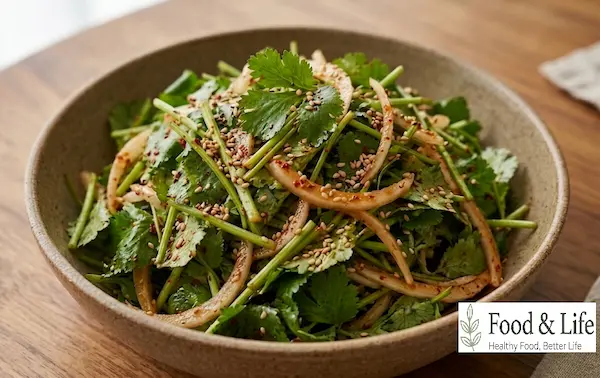
This Korean cilantro salad recipe combines 200 g (7.1 oz) of fresh cilantro and thinly sliced onion with a spicy, tangy dressing made from gochugaru, soy sauce, vinegar, and sugar.
A mixture of 2 1/2 tbsp gochugaru, 2 tbsp soy sauce, 2 tbsp vinegar, sugar, and minced garlic complements cilantro’s distinctive fresh aroma while adding savory, bright, and slightly spicy flavor. After washing the cilantro, make sure to remove as much moisture as possible and toss it very gently so the delicate leaves stay fresh and crisp.
With no cooking required, this cilantro geotjeori takes about 10 minutes to make. It works especially well alongside grilled meats such as pork belly or pork shoulder, or as a fresh Korean-style side dish.
⏱️ Cooking Time: About 10 minutes
🍳 Difficulty: ★☆☆☆☆
✓ Ingredients
🥣 Main Ingredients
- Cilantro 200 g (7.1 oz)
- 1/3 onion
🧂 Sauce & Seasonings
- Gochugaru (Korean red pepper flakes) 2 1/2 tbsp
- Sugar 1 tbsp
- Soy sauce 2 tbsp
- Vinegar 2 tbsp
- Minced garlic 1 tbsp
- Sesame seeds 1 tbsp
(Measurement guide: 1 tbsp = 15 ml, 1 tsp = 5 ml, 1 Korean paper cup = 180 ml / 6.1 fl oz)
✓ How to Make Korean Cilantro Salad
- Wash and prep the cilantro: Gently rinse 200 g (7.1 oz) cilantro under running water. Drain thoroughly in a colander, then cut it into 3–4 cm (1.2–1.6 in) lengths.
- Slice the onion: Thinly slice 1/3 onion and set aside.
- Make the dressing: In a bowl, combine 2 1/2 tbsp gochugaru, 1 tbsp sugar, 2 tbsp soy sauce, 2 tbsp vinegar, 1 tbsp minced garlic, and 1 tbsp sesame seeds. Mix well until the sugar is evenly dissolved.
- Toss gently: Add the prepared cilantro and sliced onion to a large bowl. Pour in the dressing, then gently lift and toss everything together with your fingertips so the cilantro leaves do not bruise or wilt.
✓ Key Tips for Success
- Remove excess moisture from the cilantro: If too much water remains on the cilantro after washing, it will dilute the dressing and prevent it from coating the leaves properly. The cilantro can also wilt quickly and become watery. Drain it thoroughly in a colander or use a salad spinner before cutting and seasoning it.
- Toss gently with your fingertips: Unlike sturdier vegetables used for kimchi, delicate cilantro leaves and stems can bruise when squeezed or mixed too aggressively. This can affect both the texture and fresh aroma. Keep your hands relaxed and gently lift the cilantro from the bottom of the bowl while tossing it with the dressing.
✓ Serving Tips
- Serve this cilantro salad instead of pa muchim (Korean seasoned green onion salad) alongside rich grilled meats such as samgyeopsal (Korean pork belly), pork shoulder, or thinly sliced beef brisket. Its tangy flavor helps balance the richness of the meat.
- Spoon plenty of the cilantro geotjeori over freshly cooked rice, drizzle with 1/2 tbsp sesame oil, and gently mix everything together for a fresh and distinctive bibimbap-style meal.
- Cilantro releases moisture and begins to wilt over time, so it is best to toss the salad immediately before serving and enjoy it while fresh.
✓ How to Choose Fresh Cilantro
- Check the leaves: Choose cilantro with vivid, deep green leaves. Avoid bunches with yellowing or browning tips or leaves that look dry.
- Check the stems: Look for stems that are tender rather than overly thick or tough. Fresh stems should feel firm and hold their shape instead of drooping limply.
- Check the aroma and freshness: Choose cilantro with leaves that are not bruised or slimy and with a clearly noticeable fresh cilantro aroma from both the leaves and stems.
✓ Cilantro Nutrition per 100 g (3.5 oz)
| Nutrient | Amount per 100 g (3.5 oz) |
|---|---|
| Calories | 25.00 kcal |
| Carbohydrates | 4.53 g |
| Protein | 2.43 g |
| Fat | 0.31 g |
| Sodium | 51.00 mg |
Based on 100 g of raw cilantro. Actual nutrition values may vary depending on variety, plant part, product, and preparation method.
Source: Ministry of Food and Drug Safety Food Nutrition Database – Raw Food Ingredients
✓ Frequently Asked Questions (FAQ)
Q1. Why should I dry cilantro thoroughly before making the salad?
Water left on the cilantro can dilute the dressing, keep it from coating the leaves properly, and make the salad wilt more quickly. Drain the cilantro thoroughly in a colander or use a salad spinner before tossing it with the dressing.
Q2. Why does my cilantro salad become watery or develop a grassy taste?
Mixing the cilantro too aggressively can bruise the delicate leaves and stems, causing them to release more moisture and affecting their fresh aroma. Use your fingertips to gently lift and toss the cilantro from the bottom of the bowl instead of squeezing or kneading it.
Q3. Can I add or substitute other vegetables for the onion?
Yes. Thinly sliced white parts of green onion or scallions can also work well and add a mild sharpness. However, to keep the cilantro flavor at the center of the dish, avoid adding too many strongly flavored vegetables; the original 1/3 onion provides enough sweetness and crunch.
The fresh aroma of cilantro pairs nicely with the heat of gochugaru and the bright acidity of vinegar, creating a crisp and distinctive Korean-style geotjeori. Using the seasoning ratio as written also allows the crunchy onion to soften the intensity of the cilantro and bring the flavors together.
With just 200 g (7.1 oz) of cilantro, this dish can be prepared in about 10 minutes without turning on the stove. Try it when you want a fresh side dish for samgyeopsal or pork shoulder, or when you need an easy way to use up extra cilantro.
Save or bookmark this recipe for later, and share it with someone who enjoys Korean food.
I’ll continue sharing approachable recipes and practical cooking tips that are easy to follow at home. 😊
If there is a dish you have been curious about or a recipe you would like to see next, feel free to leave a comment. 😊