
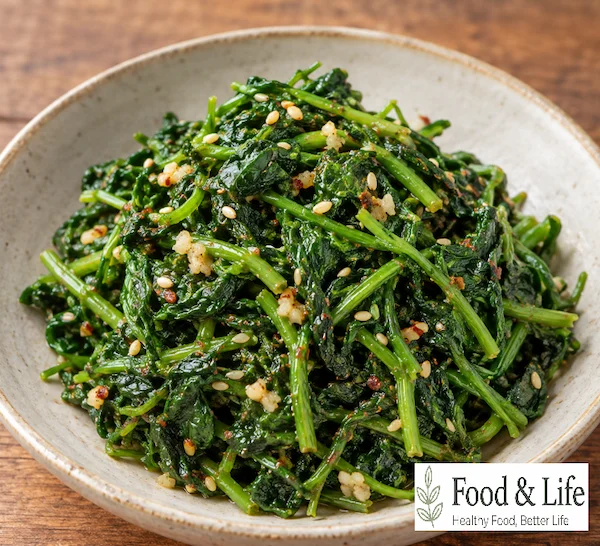
The key to making tender, clean-tasting Korean chili pepper leaf namul is to blanch the trimmed leaves in boiling water for about 40 seconds, rinse them immediately in cold water, and squeeze out the excess moisture thoroughly.
After blanching 200 g (7 oz) of chili pepper leaves, squeeze out the water and season them first with 1/2 tbsp gochugaru, 1 tbsp Korean soup soy sauce (gukganjang), and 1/2 tbsp minced garlic. Finish with 1 tbsp sesame oil and a small amount of sesame seeds so the seasoning coats the leaves evenly instead of becoming watery.
The short blanching time keeps the chili pepper leaves tender without making them overly soft. Korean soup soy sauce and sesame oil complement their naturally mild bitterness with savory umami and a nutty aroma. Ready in about 15 minutes, this Korean chili pepper leaf namul recipe makes an easy vegetable side dish for everyday meals.
⏱️ Cooking Time: About 15 minutes
🍳 Difficulty: ★☆☆☆☆
✓ Ingredients
🥣 Main Ingredient
- 200 g (7 oz) chili pepper leaves
🧂 Seasonings
- 1/2 tbsp gochugaru (Korean red pepper flakes)
- 1 tbsp Korean soup soy sauce (gukganjang)
- 1/2 tbsp minced garlic
- 1 tbsp sesame oil
- A small amount of sesame seeds
(Measurement guide: 1 tbsp = 15 ml, 1 tsp = 5 ml, 1 Korean paper cup = 180 ml)
✓ How to Make Korean Chili Pepper Leaf Namul
- Prepare the chili pepper leaves: Trim the tough stems from 200 g (7 oz) of chili pepper leaves. Rinse the leaves thoroughly under running water 2–3 times and drain. The stems remain tough even after blanching, so remove them before cooking.
- Blanch the leaves: Fill a pot with plenty of water and bring it to a boil. Add 1 tbsp salt and the prepared chili pepper leaves, then blanch for about 40 seconds, just until the leaves wilt.
- Rinse and remove excess moisture: Immediately transfer the blanched leaves to cold water to stop the cooking. Squeeze them firmly with your hands to remove excess moisture, then cut them into bite-size pieces.
- Season the leaves: Loosen the cut chili pepper leaves in a bowl. Add 1/2 tbsp gochugaru, 1 tbsp Korean soup soy sauce, and 1/2 tbsp minced garlic. Gently mix by hand until the seasoning is evenly distributed.
- Finish with sesame oil: Add 1 tbsp sesame oil and a small amount of sesame seeds. Gently toss and separate the leaves so they do not clump together.
✓ Key Tips for Success
- Keep the blanching time short: Chili pepper leaves are thin and can become overly soft if cooked too long. Blanch them in boiling water for about 40 seconds to maintain a tender texture.
- Remove enough moisture: After rinsing the blanched leaves in cold water, squeeze them firmly with both hands. Removing excess water prevents the finished namul from becoming watery and keeps the seasoning from getting diluted.
✓ Serving Tips
- Serve the seasoned chili pepper leaves with warm white rice. Their subtle aroma and the nutty sesame seasoning pair especially well with a simple bowl of rice.
- You can also use them as a bibimbap topping with a fried egg for a light and savory meal.
✓ How to Choose Fresh Chili Pepper Leaves
- Leaf color: Look for leaves with a deep, vivid green color throughout, without yellowing or dried edges.
- Stem texture: Choose leaves with stems that are tender rather than overly thick or tough. The stems should feel slightly springy when touched.
- Freshness and surface: Select evenly sized leaves that look fresh and have no visible spots or signs of pest damage.
✓ Chili Pepper Leaf Nutrition per 100 g (3.5 oz)
| Nutrient | Amount per 100 g (3.5 oz) |
|---|---|
| Calories | 45.00 kcal |
| Carbohydrates | 8.49 g |
| Protein | 5.07 g |
| Fat | 0.32 g |
| Sodium | 4.00 mg |
Values are based on 100 g (3.5 oz) of raw chili pepper leaves. Actual nutrition may vary depending on the variety, part used, product, and cooking method.
Source: Korean Ministry of Food and Drug Safety Food Nutrition Database
✓ Frequently Asked Questions (FAQ)
Q1. Should I cover the pot while blanching chili pepper leaves?
No. Blanch the chili pepper leaves quickly in boiling water with the pot uncovered to help preserve their bright green color. Rinse them immediately in cold water afterward to stop the residual heat and maintain their texture.
Q2. Why does my seasoned chili pepper leaf namul become watery and bland?
This usually happens when the blanched leaves are not squeezed thoroughly enough after rinsing. Remove as much excess moisture as possible with both hands before seasoning so the flavors stay concentrated.
Q3. Can I use regular soy sauce instead of Korean soup soy sauce?
Korean soup soy sauce works best for maintaining the clean flavor and relatively light color of this namul. Regular soy sauce can make the leaves darker and may add a slightly sweeter flavor, so Korean soup soy sauce is recommended for this recipe.
When I followed this recipe and blanched the chili pepper leaves for about 40 seconds before squeezing out the moisture thoroughly, the leaves stayed tender without becoming overly limp.
The clean umami of Korean soup soy sauce and the nutty aroma of sesame oil paired well with the naturally subtle bitterness of the chili pepper leaves. The result was a simple Korean vegetable side dish that tasted balanced with warm rice without relying on heavy seasoning.
If your chili pepper leaf namul often turns tough or releases too much water after seasoning, try blanching the leaves for just 40 seconds and squeezing out the moisture thoroughly before mixing. It is an easy way to prepare a clean, savory Korean vegetable side dish in about 15 minutes.
Save or bookmark this recipe so you can easily find it again, and share it with someone who enjoys Korean food.
I’ll continue sharing easy-to-follow recipes and practical cooking tips. 😊
If there is a dish you would like to see next, feel free to leave a comment. 😊