
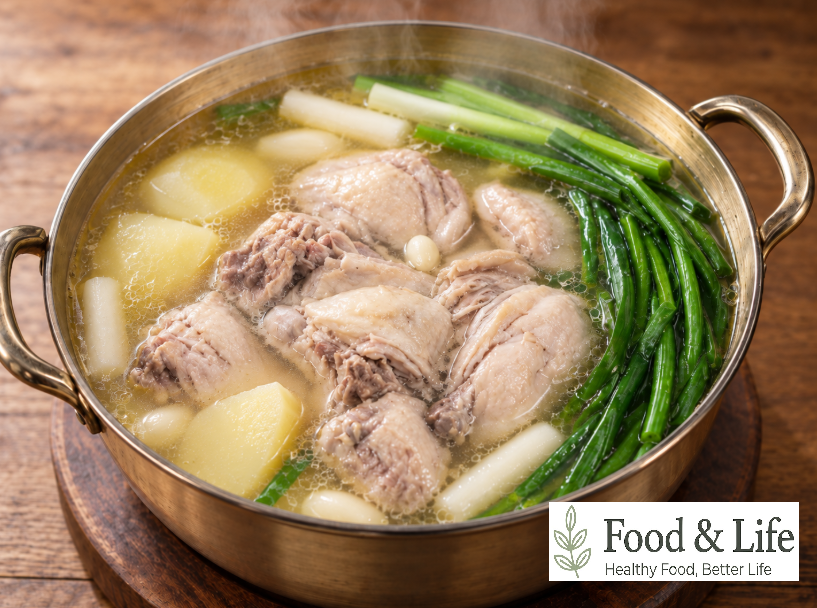
When you want a comforting meal with plenty of tender chicken and a warm, flavorful broth, Dakhanmari is one of Korea’s most satisfying one-pot dishes. This Jongno-style Dakhanmari, inspired by Lee Jung-hyun, simmers chicken with green onions, garlic, and onion to create a clear yet deeply savory broth, then adds potatoes and chewy wheat tteok for a hearty finish. A spicy, tangy mustard dipping sauce made with the chicken broth brings extra flavor to the mild, tender chicken. Enjoy the soft chicken, fluffy potatoes, and chewy tteok together in one steaming pot.
⏱️ Cooking Time: About 50 minutes
🍳 Difficulty: ★★☆☆☆
✓ Ingredients
🥣 Main Ingredients
- 1 kg (2.2 lb) cut-up chicken for stew
- 1.5 L (50.7 fl oz) water
- 3 potatoes
- 1 handful scallions
- 2 large green onions, for garnish
- 3 large green onions with roots attached, for the broth
- 1/2 onion, for the broth
- 1 handful whole garlic cloves, for the broth
- 1 handful whole garlic cloves, for garnish
- 1 tbsp whole black peppercorns, for the broth
- 1 handful wheat tteok (Korean wheat cakes)
🧂 Seasonings & Dipping Sauce
- 1/2 tbsp coarse salt (or fine salt)
- 6 tbsp fine Korean red pepper powder
- 3 tbsp brewed soy sauce
- 6 tbsp oligosaccharide syrup
- 6 tbsp apple vinegar
- 1 tbsp Korean hot mustard
- 1 tbsp minced garlic
(Measurement guide: 1 tbsp = 15 ml, 1 tsp = 5 ml, 1 Korean paper cup = 180 ml / 6.1 fl oz)
✓ How to Make Jongno Dakhanmari
- Prepare the ingredients: Soak the wheat tteok in lukewarm water for 30 minutes. Cut the green onions for garnish into large 4 cm (1.6-inch) pieces, and slice the potatoes into flat 1 cm (0.4-inch) thick pieces.
- Clean the chicken: Rinse the cut-up chicken thoroughly under running water, removing any remaining organs and blood clots between and around the bones. Cleaning these areas carefully helps prevent unwanted odors in the finished broth.
- Make the chicken broth: Add the cleaned chicken, 1.5 L (50.7 fl oz) water, 3 green onions with the roots attached, 1/2 onion, 1 handful whole garlic cloves, and 1 tbsp whole black peppercorns to a large pot. Cover and simmer for 30 minutes. Skim off foam and excess fat as they rise to keep the broth clean and clear.
- Make the spicy mustard dipping sauce: Combine 9 tbsp of the hot chicken broth with 6 tbsp fine Korean red pepper powder and let the pepper powder absorb the broth. Add 3 tbsp brewed soy sauce, 6 tbsp oligosaccharide syrup, 6 tbsp apple vinegar, 1 tbsp Korean hot mustard, and 1 tbsp minced garlic, then mix well. Using chicken broth instead of water gives the sauce more savory depth.
- Cook the potatoes and garlic: Remove the green onions, onion, garlic, and other broth aromatics from the pot. Add the sliced potatoes and another handful of whole garlic cloves. Cover and cook for 10 minutes.
- Add the tteok and green onions: Add the soaked wheat tteok and the large green onion pieces. Cook for another 10 minutes, then season the broth with 1/2 tbsp salt.
- Finish with scallions: Arrange the long-cut scallions over the top of the pot. Bring everything to a brief simmer until the scallions soften, then serve.
✓ Key Tips for Clear, Clean-Tasting Dakhanmari
- Thoroughly scrub away any dark red organ remnants and blood clots around the chicken bones under running water. This is important for making a clean-tasting broth without strong chicken odors.
- During the early stages of simmering, skim off the foam and impurities that rise to the surface. Removing them helps keep the broth clear and refreshing rather than cloudy.
✓ Serving Tips
- Wrap pieces of tender chicken with the softened scallions and dip them generously into the spicy, tangy mustard sauce.
- You can also add finely shredded cabbage or garlic chives to the dipping sauce and enjoy them together with the chicken.
- After finishing the chicken, potatoes, and tteok, add kalguksu noodles (Korean knife-cut noodles) to the remaining broth and simmer until cooked for a hearty finish.
✓ How to Choose Good Chicken
- Check the skin and appearance: Choose chicken with clean skin that is not excessively wrinkled or loose. The pores should be visible, with no noticeable feather remnants or damage on the surface.
- Check the color and texture: The meat should have a light pinkish-red color rather than looking unusually pale or yellow. It should feel springy when lightly pressed and should not release excessive moisture.
- Check the smell: After opening the package, avoid chicken with sour, spoiled, or unusually strong odors. Fresh chicken should retain its mild natural aroma.
✓ Chicken Nutrition per 100 g (3.5 oz)
| Nutrient | Amount per 100 g (3.5 oz) |
|---|---|
| Calories | 118.00 kcal |
| Carbohydrates | 0.20 g |
| Protein | 22.00 g |
| Fat | 2.60 g |
| Sodium | 63.00 mg |
Values are based on 100 g (3.5 oz) of raw native Korean chicken. Actual nutrition may vary depending on breed, cut, product, and cooking method.
Source: Ministry of Food and Drug Safety (Korea) – Food Nutrition Database, Raw Ingredients
✓ Frequently Asked Questions (FAQ)
Q1. How long should I simmer the chicken, and what heat level should I use?
Bring the pot to a boil over high heat, then cover and reduce to medium-low. Simmer gently for 30 minutes so the broth develops a rich flavor without reducing too quickly.
Q2. Can I use rice tteok instead of wheat tteok?
Yes. Rice tteok can be substituted, but wheat tteok absorbs less broth and is less likely to make the soup noticeably thick even after simmering, which makes it especially well suited to this clear-style chicken hot pot.
With one chicken and a few simple vegetables, you can make a generous pot of Jongno-style Dakhanmari with clear, deeply savory broth, tender chicken, potatoes, and chewy wheat tteok. Dip the chicken and scallions into the spicy, tangy mustard sauce, then finish the remaining broth with kalguksu noodles for an especially satisfying meal.
If you found this recipe helpful, please bookmark it and share it with anyone who enjoys comforting Korean recipes.
I’ll continue sharing approachable recipes and practical cooking tips that make Korean food easier to recreate at home. 😊
If there’s a Korean dish or recipe you’d like to see next, feel free to leave a comment! 😊