
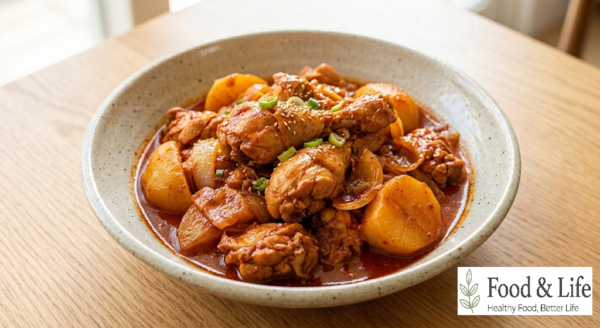
Dakbokkeumtang is a Korean spicy braised chicken dish made by first stir-frying the chicken with minced garlic and soy sauce, then simmering it in a sweet, spicy sauce with oyster sauce.
This Dakbokkeumtang recipe uses 1 whole chicken weighing 1.5 kg (3.3 lb), which is first seasoned and stir-fried with 6 tbsp soy sauce. Then 300 ml (10.1 fl oz) water, 4 tbsp gochugaru, 3 tbsp gochujang, and 2 tbsp oyster sauce are added to create a rich, flavorful sauce. As the potatoes and onion simmer with the chicken, moisture from the vegetables and starch from the potatoes naturally thicken the sauce.
Tender chicken and fluffy potatoes soak up the spicy-sweet sauce, making this a hearty one-pot dish that pairs especially well with steamed rice.
⏱️ Cooking Time: About 25 minutes
🍳 Difficulty: ★★☆☆☆
✓ Ingredients
🥣 Main Ingredients
- 1 whole chicken, 1.5 kg (3.3 lb)
- 2 potatoes
- 1/2 onion
- 1 large green onion
🧂 Sauce & Seasonings
- Cooking oil, as needed
- 1 generous tbsp minced garlic
- 6 tbsp soy sauce
- 300 ml (10.1 fl oz) water
- 4 tbsp sugar
- 3 tbsp cooking wine
- 4 tbsp gochugaru (Korean red pepper flakes)
- 2 tbsp oyster sauce
- 3 tbsp gochujang (Korean chili paste)
- Black pepper, to taste
(Measurement guide: 1 tbsp = 15 ml, 1 tsp = 5 ml, 1 paper cup = 180 ml / 6.1 fl oz)
✓ How to Make Dakbokkeumtang
- Clean the chicken: Rinse 1 whole cut-up chicken, 1.5 kg (3.3 lb), thoroughly under running water. Remove any remaining blood or internal tissue around the bones, then drain well in a colander.
- Add the chicken to the pan: Add a generous amount of cooking oil to a deep skillet or wok, then add the prepared chicken.
- Stir-fry with garlic and soy sauce: Add 1 generous tbsp minced garlic and 6 tbsp soy sauce. Stir-fry over medium heat until the outside of the chicken is evenly coated with soy sauce and lightly browned.
- Add the water and seasonings: Pour in 300 ml (10.1 fl oz) water, then add 4 tbsp sugar, 3 tbsp cooking wine, 4 tbsp gochugaru, 2 tbsp oyster sauce, and 3 tbsp gochujang. Stir well so the seasonings dissolve without clumping, then bring to a vigorous boil over high heat.
- Add the potatoes and onion: Add 2 potatoes cut into large chunks and 1/2 onion. Simmer over medium-low heat until the potatoes are tender and fluffy.
- Add the green onion and black pepper: Once the potatoes are fully cooked, add black pepper to taste and 1 large green onion sliced diagonally. Continue simmering over medium-low heat for another 5 minutes, until the sauce has reduced slightly.
- Adjust the flavor and finish: Taste the sauce and, if desired, add 1 additional tbsp minced garlic for a stronger garlic flavor. Turn off the heat and transfer the finished Dakbokkeumtang to a serving dish.
✓ Key Tips for Success
- Season and stir-fry the chicken before adding water: If you pour in the water immediately after adding the chicken, the seasoning may not penetrate as well and the chicken can retain more of its raw aroma. Before adding the water, stir-fry the chicken thoroughly with 1 generous tbsp minced garlic and 6 tbsp soy sauce until the surface is browned and well seasoned.
- Control the heat and amount of liquid: Adding too much water from the beginning or cooking only over high heat can make the chicken dry while leaving the sauce too thin. Use 300 ml (10.1 fl oz) water and simmer over medium-low heat so moisture from the vegetables can release naturally and the potato starch can help thicken the sauce.
✓ Serving Tips
- Lightly mash the tender potatoes with a spoon and mix them with the spicy-sweet sauce and steamed rice for an even richer bite.
- After eating the chicken and vegetables, add cooked ramen or udon noodles to the remaining sauce and toss them together. You can also make fried rice by adding rice, shredded nori, and sesame oil.
- If you enjoy a stronger garlic flavor, add 1 tbsp minced garlic near the end of cooking and let the sauce come to a brief simmer before serving.
✓ How to Choose Fresh Chicken
- Color and sheen: Choose chicken with clear, light pink flesh rather than meat that looks unusually pale or dark. The surface should have a moist, fresh-looking sheen.
- Firm texture: When gently pressed through the packaging, the meat should feel firm rather than mushy and should spring back into shape.
- Liquid in the package: Look for chicken without excessive blood or meat juices pooled at the bottom of the package. The skin should not feel excessively slimy or have an unpleasant odor.
Source: National Institute of Animal Science – Livestock News
✓ Chicken Nutrition per 100 g (3.5 oz)
| Nutrient | Amount per 100 g (3.5 oz) |
|---|---|
| Calories | 118.00 kcal |
| Carbohydrates | 0.20 g |
| Protein | 22.00 g |
| Fat | 2.60 g |
| Sodium | 63.00 mg |
Based on 100 g of raw native Korean chicken. Actual nutrition values may vary depending on the breed, cut, product, and cooking method.
Source: Ministry of Food and Drug Safety Food Nutrition Database
✓ Frequently Asked Questions (FAQ)
Q1. Can I stir-fry the chicken directly without blanching it first?
Yes. After thoroughly rinsing away any blood and remaining internal tissue under running water, add the chicken to a pan with cooking oil, minced garlic, and soy sauce, then stir-fry it over high heat first. This helps season the surface and reduces unwanted odors without a separate blanching step.
Q2. Why does the chicken taste bland inside even though the sauce is strongly seasoned?
If you add the water immediately after putting the chicken in the pan, the seasoning may not penetrate the meat as well. Before adding the 300 ml (10.1 fl oz) water, stir-fry the chicken thoroughly with 1 generous tbsp minced garlic and 6 tbsp soy sauce so the surface is well seasoned first.
Q3. What can I use instead of oyster sauce?
In place of 2 tbsp oyster sauce, you can add 1 tbsp soy sauce, 1/2 tbsp tuna seasoning sauce, and a small amount of oligosaccharide syrup. This helps recreate a balance of savory depth and mild sweetness.
Stir-frying the chicken with minced garlic and soy sauce before adding the remaining seasonings gives the meat a savory base from the very beginning. The oyster sauce adds deeper umami to the spicy-sweet broth, while the potatoes gradually release starch as they cook, giving the sauce a naturally thick, rich consistency that goes especially well with rice.
If you are looking for how to make Dakbokkeumtang at home or want a Korean chicken dish with a rich, reduced spicy sauce, try this version that seasons the chicken with soy sauce first and finishes the sauce with oyster sauce. It takes about 25 minutes to prepare and works well as a hearty family meal.
Save or bookmark this recipe so you can easily find it again, and share it with someone who enjoys Korean spicy chicken dishes.
More easy-to-follow recipes and practical cooking tips are coming soon. 😊
If there is a dish you would like to see featured next, feel free to leave a comment. 😊