
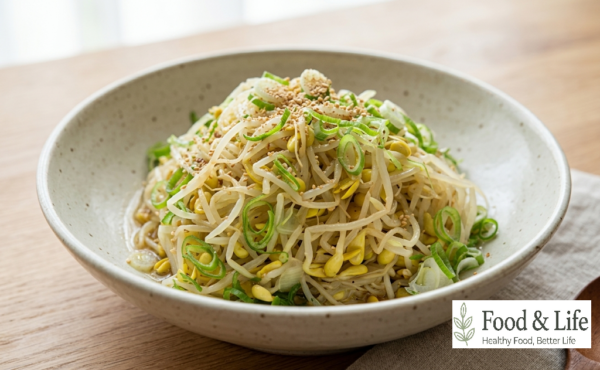
Korean soybean sprout salad may be a simple side dish, but the cooking time and the order in which you season the sprouts can make a noticeable difference in both texture and aroma.
For this Kongnamul Muchim (Korean Soybean Sprout Salad), 400 g (14.1 oz) of soybean sprouts are cooked with 200 ml (6.8 fl oz) of water and a sheet of dried kelp with the lid closed. Once steam begins to rise, the sprouts cook for exactly 3 minutes to keep their signature crunch. After a quick rinse in cold water, they are tossed with sesame oil first to help limit excess moisture loss, then seasoned with tuna extract sauce and garlic for extra savory depth.
The nutty aroma of sesame oil and crisp soybean sprouts come together in a clean, simple Korean side dish that is easy to serve with everyday meals.
⏱️ Cooking Time: About 15 minutes
🍳 Difficulty: ★☆☆☆☆
✓ Ingredients
🥣 Main Ingredients
- 400 g (14.1 oz) soybean sprouts
- 200 ml (6.8 fl oz) water
- 1 sheet dried kelp (dashima)
- A small amount of green onion
- A small amount of sesame seeds
🧂 Sauce & Seasonings
- 30 ml (2 tbsp) sesame oil
- 15 ml (1 tbsp) tuna extract sauce
- 15 ml (1 tbsp) minced garlic
- 15 ml (1 tbsp) seasoned salt
- 1 pinch anchovy Dashida seasoning
(Measurement guide: 1 tbsp = 15 ml, 1 tsp = 5 ml, 1 Korean paper cup = 180 ml / 6.1 fl oz)
✓ How to Make Korean Soybean Sprout Salad
- Wash the soybean sprouts: Place the soybean sprouts in a large bowl and gently swish them under running water, allowing loose bean skins and any debris to wash away.
- Steam-cook the sprouts: Add the washed soybean sprouts, 200 ml (6.8 fl oz) water, and 1 sheet of dried kelp to a pot. Cover with a lid, and once steam begins to rise, cook for exactly 3 minutes.
- Rinse in cold water and drain: Remove the cooked soybean sprouts immediately and rinse them twice in cold water. Transfer to a colander, then gently squeeze with your hands to remove excess water. Cooling them quickly helps maintain their crisp texture.
- Coat with sesame oil first: Place the drained soybean sprouts in a bowl and add 30 ml (2 tbsp) sesame oil first. Toss thoroughly to coat the sprouts. Coating them with oil before adding salty seasonings helps reduce excessive moisture loss.
- Season and finish: Add 15 ml (1 tbsp) tuna extract sauce, 15 ml (1 tbsp) minced garlic, 15 ml (1 tbsp) seasoned salt, and 1 pinch anchovy Dashida seasoning. Toss until evenly seasoned, then finish with sliced green onion and sesame seeds.
✓ Key Tips for Success
- Keep the lid closed and follow the cooking time: Opening and closing the lid while soybean sprouts are cooking can bring out their characteristic raw, bean-like smell. Keep the lid closed and cook for exactly 3 minutes after steam begins to rise for a cleaner aroma and crisp texture.
- Toss with sesame oil before adding the seasonings: Adding salty seasonings right away can draw moisture out of the sprouts quickly. Coating them with sesame oil first helps them retain their crisp texture for longer.
✓ Serving Tips
- Serve the seasoned soybean sprouts over warm white rice with gochujang and a fried egg for an easy bibimbap-style meal.
- For a spicy version, add about 1/2 tbsp of fine gochugaru (Korean red pepper powder) and toss well.
- I personally prefer soybean sprouts with a firm, crisp bite rather than an overly soft texture, and this cooking method kept the stems pleasantly crunchy.
✓ How to Choose Good Soybean Sprouts
- Stem condition: Choose soybean sprouts with thick, white stems that feel firm and springy rather than soft. The stems should not be excessively long.
- Bean heads and roots: Look for sprouts with round, firm yellow bean heads without black spots or signs of spoilage. Choose sprouts with fewer fine roots and no noticeable discoloration.
✓ Soybean Sprout Nutrition per 100 g (3.5 oz)
| Nutrient | Amount per 100 g (3.5 oz) |
|---|---|
| Calories | 43.00 kcal |
| Carbohydrates | 3.44 g |
| Protein | 4.66 g |
| Fat | 1.19 g |
| Sodium | 3.00 mg |
Based on raw soybean sprouts per 100 g (3.5 oz). Actual nutrition values may vary depending on variety, part used, product, and cooking method.
Source: Ministry of Food and Drug Safety Food Nutrition Database – Raw Food Ingredients
✓ Frequently Asked Questions (FAQ)
Q1. Do soybean sprouts need to be completely submerged in water when cooking?
No. This recipe uses only 200 ml (6.8 fl oz) of water with the lid closed so the sprouts cook in the generated steam. This method is suitable for keeping the sprouts crisp while reducing nutrient loss from cooking in a large amount of water.
Q2. Why does so much liquid collect after the soybean sprouts are seasoned?
This can happen if the sprouts are seasoned while they are still hot or if salty seasonings are added directly without first coating them in sesame oil. The salt can draw moisture from the sprouts, causing liquid to collect in the bowl.
Q3. Can I use another seasoning instead of anchovy Dashida?
Yes. You can use a small amount of beef Dashida or MSG instead. For a cleaner flavor, you can also leave it out and adjust the amount of salt slightly to taste.
Following this recipe, I cooked the soybean sprouts with the lid closed for exactly 3 minutes after the steam began to rise, then quickly rinsed them in cold water. The stems stayed crisp without the strong raw bean-like smell. Tossing them with sesame oil before adding the tuna extract sauce and garlic also helped the nutty aroma and savory seasoning coat the sprouts evenly.
I usually prefer seasoned soybean sprouts with a crisp bite rather than an overly soft texture, and this method gave them just the right crunch without leaving the seasonings sitting on the surface. My family also enjoyed the mild, nutty flavor as a simple side dish with rice.
If you want to make crisp Korean soybean sprout salad without a strong bean smell, cook the sprouts with 200 ml (6.8 fl oz) of water for exactly 3 minutes after steam appears, then toss them with sesame oil before adding the remaining seasonings. With simple ingredients and a short cooking time, it is an easy everyday Korean side dish to keep in your regular meal rotation.
Save or bookmark this recipe for later, and share it with someone who enjoys Korean home cooking.
I’ll continue sharing approachable recipes and practical cooking tips that are easy to follow at home. 😊
If there is a dish you have been curious about or a recipe you would like to see next, feel free to leave a comment. 😊