
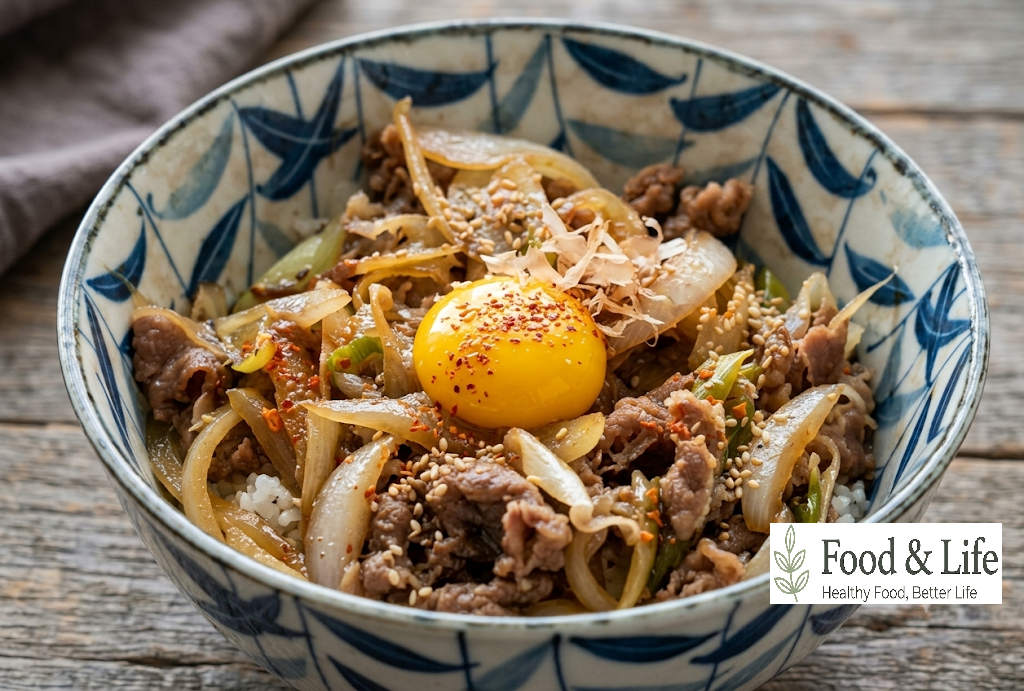
Looking for a satisfying rice bowl with deep flavor that comes together quickly without needing a long-simmered broth? This gyudon recipe comes from Korean chef Choi Kang-rok and is designed to be ready in about 10 minutes by using the rendered fat from thinly sliced beef belly to cook the vegetables before adding a simple sweet-and-savory sauce.
The rich flavor of woosamgyeop (thinly sliced beef belly) pairs especially well with thinly shaved burdock root, which adds a light crunch and earthy aroma. As the beef and vegetables simmer briefly in the soy-based sauce, everything becomes coated in a glossy, savory-sweet mixture that soaks beautifully into warm rice.
⏱️ Cooking Time: About 10 minutes
🍳 Difficulty: ★☆☆☆☆
✓ Ingredients (Serves 2–3)
🥣 Main Ingredients
- 300 g (10.6 oz) woosamgyeop (thinly sliced beef belly)
- 1/2 onion
- 100 g (3.5 oz) burdock root
- 1 green onion
- 2–3 bowls warm cooked rice
- 2–3 egg yolks
- A little sliced green onion, for garnish
- A little sesame seeds
- A little shichimi togarashi
🧂 Sauce & Seasonings
- 60 ml (2 fl oz / about 4 tbsp) water
- 90 ml (3 fl oz / 6 tbsp) cooking wine
- About 40 ml (1.4 fl oz / 2.5 tbsp) soy sauce
- About 10 g (0.35 oz / 2/3 tbsp) brown sugar
- A little ground black pepper
(Measurement guide: 1 tbsp = 15 ml, 1 tsp = 5 ml, 1 Korean paper cup = 180 ml / 6.1 fl oz)
✓ How to Make Gyudon
- Prepare the ingredients: Slice the onion into fairly thick strips and cut the green onion diagonally. Make shallow cuts in the burdock root, then shave it into thin pieces as if sharpening a pencil.
- Cook the beef: Heat a skillet and add 300 g (10.6 oz) of thinly sliced beef belly without any cooking oil. Cook until lightly browned and enough beef fat has rendered into the pan.
- Add and cook the vegetables: Once plenty of fat has rendered, add the onion, green onion, and prepared burdock root. Stir-fry everything together until the beef is fully cooked. Cooking the meat and vegetables completely before adding the liquid seasonings helps the burdock aroma and rich beef flavor absorb into the vegetables instead of tasting separate from the sauce.
- Add the sauce and simmer: Once the beef is fully cooked, add 60 ml (2 fl oz) water, 90 ml (3 fl oz) cooking wine, about 10 g (0.35 oz) brown sugar, and about 40 ml (1.4 fl oz) soy sauce. Add a little black pepper and simmer briefly until the sugar has dissolved and the sauce has reduced slightly.
- Serve over rice: Divide warm rice among serving bowls and generously spoon the simmered beef, burdock, and onion over the top along with some of the sauce.
- Add the toppings: Carefully place an egg yolk in the center of each bowl. Finish with sliced green onion, shichimi togarashi, sesame seeds, and black pepper to taste.
✓ Key Tips for Success
- Cook the beef before adding the sauce: If you pour in the liquid seasonings before the beef is fully cooked, the meat may take longer to cook and can become tougher. Brown and cook the beef thoroughly before adding the sauce.
- Do not mix the entire bowl like bibimbap: Lightly break the egg yolk and scoop it up together with the rice and toppings. This helps preserve the texture of the rice while letting you enjoy the sauce and creamy yolk together.
✓ Serving Tips
- Use a vegetable peeler for the burdock: If shaving whole burdock root with a knife feels difficult, use a vegetable peeler to create thin, evenly sized strips.
- Brown sugar works especially well: White sugar can also be used, but brown sugar gives the sauce a deeper color and adds a subtle richness.
- Serve with beni shoga: A small amount of Japanese pickled red ginger, or beni shoga, adds a fresh, tangy contrast to the sweet and savory beef bowl.
✓ How to Choose Good Beef
- Lean meat color: Choose beef with a bright, clear red color rather than meat that looks excessively dark.
- Fat color and distribution: Look for fat that is clean, milky white rather than yellow, with fine marbling distributed throughout the lean meat.
- Texture and firmness: The beef should feel resilient when lightly pressed, with a naturally moist surface that is not mushy.
Source: Rural Development Administration Nongsaro – How to Choose Good Beef
✓ Beef Nutrition per 100 g (3.5 oz)
| Nutrient | Amount per 100 g (3.5 oz) |
|---|---|
| Calories | 162.00 kcal |
| Carbohydrates | 0.00 g |
| Protein | 23.00 g |
| Fat | 6.92 g |
| Sodium | 50.00 mg |
Based on 100 g (3.5 oz) of raw Korean Hanwoo beef, Grade 1, round cut. Actual nutritional values may vary depending on breed, cut, product, and cooking method.
Source: Ministry of Food and Drug Safety Food Nutrition Database – Raw Food Ingredients
✓ Frequently Asked Questions (FAQ)
Q1. Do I need to soak the burdock root in water before cooking it?
Not for this recipe. Because the burdock is stir-fried directly in the rendered beef fat and then simmered in the sweet-and-savory sauce, it can be shaved straight into the pan without a separate vinegar-water soak.
Q2. Why does the gyudon sauce dry out or the beef become tough?
If the sauce is boiled too long over high heat after the seasonings are added, the liquid can evaporate quickly and the beef may become tough. Once the sauce comes to a boil and the sugar has dissolved, reduce the heat and finish with enough liquid remaining to coat the rice.
Q3. Can I use a leaner cut of beef instead of thinly sliced beef belly?
Yes. Thinly sliced beef round, bottom round, chuck, or brisket can also be used. If you choose a lean cut, add about 1/2 tablespoon of cooking oil when stir-frying the vegetables so they cook more smoothly.
For a quick dinner, try this easy gyudon recipe by chef Choi Kang-rok, where the earthy aroma of burdock root meets rich beef and a sweet-and-savory soy sauce. The soft egg yolk adds an extra creamy finish when spooned together with the warm rice and beef.
Save or bookmark this recipe for an easy meal you can make again later, and share it with someone who enjoys Japanese-style rice bowls.
More approachable recipes and practical cooking tips will continue to be shared here. 😊
If there is a dish or recipe you would like to see next, feel free to leave a comment. 😊