
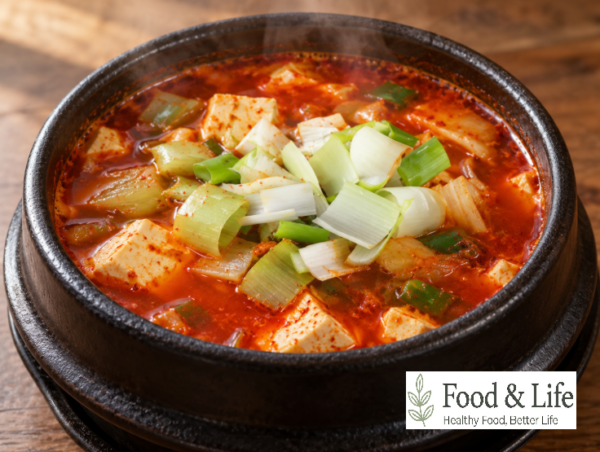
When you want a warm, spicy soup for a busy dinner but do not have time to make a complicated broth, Dubu Jjigae (Korean Tofu Stew) is an easy option.
This recipe starts by briefly blanching 500 g (17.6 oz) of tofu so it holds its shape better while the stew cooks. Korean soup soy sauce and saeujeot (salted fermented shrimp) provide a clean but savory depth without requiring a separate stock. The key is to add only enough water so the tofu is not completely submerged, allowing the gochugaru and seasonings to stay concentrated and coat the ingredients evenly.
Soft tofu and king oyster mushroom come together with the spicy kick of Cheongyang chili pepper for a warm Korean stew that pairs perfectly with a bowl of rice.
⏱️ Cooking Time: About 20 minutes
🍳 Difficulty: ★★☆☆☆
✓ Ingredients
🥣 Main Ingredients
- 500 g (17.6 oz) tofu
- 1/2 onion
- 1 king oyster mushroom
- 1/2 stalk green onion
- 1 Cheongyang chili pepper
🧂 Sauce & Seasonings
- 30 ml (2 tbsp) Korean soup soy sauce (guk-ganjang)
- 45 ml (3 tbsp) gochugaru (Korean red pepper flakes)
- 15 ml (1 tbsp) saeujeot (salted fermented shrimp)
- 7.5 ml (1/2 tbsp) minced garlic
- 7.5 ml (1/2 tbsp) corn syrup
- 7.5 ml (1/2 tbsp) sea salt
(Measurement guide: 1 tbsp = 15 ml, 1 tsp = 5 ml, 1 Korean paper cup = 180 ml / 6.1 fl oz)
✓ How to Make Korean Tofu Stew
- Blanch the tofu: Briefly blanch the tofu in boiling water, then remove it from the pot. This helps firm up the tofu so it is less likely to break apart while the stew cooks.
- Cut the ingredients: Cut the onion, green onion, king oyster mushroom, and blanched tofu into bite-size pieces.
- Arrange everything in the pot: Pour 30 ml (2 tbsp) Korean soup soy sauce into the bottom of a pot. Add the onion, king oyster mushroom, and tofu in layers, then pour in enough water so the tofu is only partially submerged rather than completely covered.
- Add the seasonings and boil: Add 45 ml (3 tbsp) gochugaru, 15 ml (1 tbsp) saeujeot, 7.5 ml (1/2 tbsp) minced garlic, and 7.5 ml (1/2 tbsp) corn syrup. Bring to a vigorous boil over high heat.
- Adjust the seasoning and finish: Once the broth is boiling and the onion has turned translucent, add 7.5 ml (1/2 tbsp) sea salt, the sliced green onion, and the Cheongyang chili pepper. Bring everything to a final boil, then remove from the heat.
✓ Key Tips for Success
- Control the amount of water: Adding too much water will dilute the broth and weaken the flavor of the seasonings. Pour in only enough water so the tofu remains partially visible above the broth. This keeps the natural sweetness from the ingredients and the seasonings more concentrated.
- Blanch the tofu first: If the tofu is not briefly blanched before cutting and cooking, it can break apart more easily in the bubbling stew and make the broth cloudy. A quick blanch helps the tofu hold its shape.
✓ Serving Tips
- Spoon plenty of tofu and broth over freshly cooked white rice and mix lightly for a comforting meal.
- Slice the Cheongyang chili pepper and add it during the final stage of cooking if you want a sharper, spicier aroma.
- I personally prefer a broth that is spicy and refreshing without feeling overly heavy, and the clean savory flavor from the saeujeot worked especially well in this version.
✓ How to Choose Good Tofu
- Shape and cut surface: Choose tofu with a smooth exterior and clean, well-defined edges. When cut, the interior should have small, evenly distributed pores.
- Color and aroma: Fresh tofu should have a bright, clean ivory color with a mild, nutty soybean aroma rather than a sour or stale smell.
- Packing liquid: For packaged tofu, choose one with clear packing liquid and avoid packages that appear swollen.
✓ Tofu Nutrition per 100 g (3.5 oz)
| Nutrient | Amount per 100 g (3.5 oz) |
|---|---|
| Calories | 97.00 kcal |
| Carbohydrates | 3.75 g |
| Protein | 9.62 g |
| Fat | 4.63 g |
| Sodium | 1.00 mg |
Based on tofu per 100 g (3.5 oz). Actual nutrition values may vary depending on variety, product, and cooking method.
Source: Ministry of Food and Drug Safety Food Nutrition Database – Raw Food Ingredients
✓ Frequently Asked Questions (FAQ)
Q1. Why should I blanch tofu before adding it to the stew?
Briefly blanching tofu in boiling water helps remove some moisture and firms its structure, making it less likely to crumble while the stew is boiling.
Q2. Why does tofu stew sometimes turn thick or cloudy?
The broth can become thick or cloudy if the tofu breaks apart during cooking or if too much gochugaru is added. Blanching the tofu first and keeping the stew at the proper liquid level helps maintain a cleaner broth.
Q3. Can I use firm tofu instead of tofu made for stews?
Yes. Firm tofu works well because its lower moisture content helps it stay intact during cooking. If you prefer a softer and more tender tofu texture, tofu labeled for stews is the better choice.
After briefly blanching the tofu and simmering it with just enough water and seasoning, the tofu held its shape well while remaining soft inside. The Korean soup soy sauce and saeujeot added plenty of savory depth, while the gochugaru and Cheongyang chili pepper gave the broth a clean, spicy kick without needing a separate stock.
I usually prefer spicy Korean stews with a lighter, cleaner broth rather than something overly thick or heavy, and this tofu stew had a satisfying balance of soft tofu and refreshing heat. My family also enjoyed the broth because it was flavorful without tasting excessively salty.
If you want to make a simple spicy Korean tofu stew without preparing a separate broth, blanch the tofu first and use only enough water to partially cover it. The ingredients are straightforward and the cooking time is short, making this a practical recipe for a warm weeknight dinner.
Save or bookmark this recipe for later, and share it with someone who enjoys Korean home cooking.
I’ll continue sharing approachable recipes and practical cooking tips that are easy to follow at home. 😊
If there is a dish you have been curious about or a recipe you would like to see next, feel free to leave a comment. 😊