
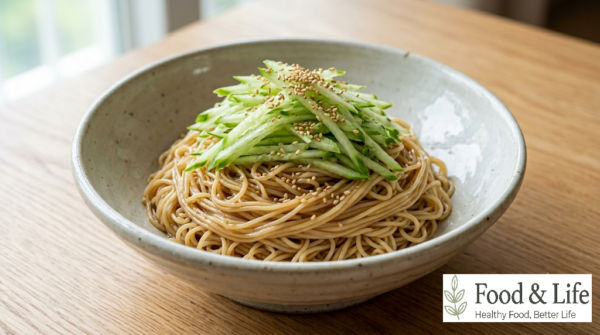
When you need a quick and simple meal, Ganjang Bibim Guksu (Korean soy sauce noodles) is an easy noodle dish you can make in just minutes.
A sweet-and-savory sauce made with soy sauce, sesame oil, maesil syrup, and vinegar coats the chewy somyeon noodles with a salty yet refreshing flavor. The key to springy noodles is cooking the somyeon for exactly 3 minutes 30 seconds, then rubbing and rinsing it thoroughly under cold water to remove the surface starch.
Finished with fragrant sesame oil and crisp cucumber, this light and satisfying noodle bowl is perfect for an easy lunch or quick meal.
⏱️ Cooking Time: About 15 minutes
🍳 Difficulty: ★☆☆☆☆
✓ Ingredients (Serves 2)
🥣 Main Ingredients
- Somyeon (thin Korean wheat noodles), 2 servings
- 1/3 cucumber
- Sesame seeds, a small amount
🧂 Sauce & Seasonings
- 60 ml (2 fl oz / 4 tbsp) soy sauce
- 30 ml (1 fl oz / 2 tbsp) sesame oil
- 30 ml (1 fl oz / 2 tbsp) maesil syrup (Korean green plum syrup)
- 7.5 ml (1/2 tbsp) minced garlic
- 15 ml (0.5 fl oz / 1 tbsp) vinegar
(Measurement guide: 1 tbsp = 15 ml, 1 tsp = 5 ml, 1 Korean paper cup = 180 ml / 6.1 fl oz)
✓ How to Make Ganjang Bibim Guksu
- Prepare the cucumber: Thinly julienne 1/3 cucumber and set aside.
- Cook the somyeon: Bring a pot of water to a boil, add 2 servings of somyeon, and cook for 3 minutes 30 seconds.
- Add cold water while cooking: When the foam rises and looks like it may boil over, add 180 ml (6.1 fl oz / 3/4 US cup) cold water. Repeat this twice. The sudden temperature changes help the noodles cook through while maintaining a chewy texture.
- Rinse off the starch and drain well: Immediately transfer the cooked somyeon to cold water. Rub the noodles firmly between your hands and rinse until the water runs clear. Drain in a colander and remove as much excess water as possible.
- Toss with the sauce: Add 60 ml (4 tbsp) soy sauce, 30 ml (2 tbsp) sesame oil, 30 ml (2 tbsp) maesil syrup, 7.5 ml (1/2 tbsp) minced garlic, and 15 ml (1 tbsp) vinegar to the drained noodles. Toss thoroughly until every strand is evenly coated.
- Plate and serve: Transfer the seasoned noodles to a bowl, top generously with the julienned cucumber, and finish with a light sprinkle of sesame seeds.
✓ Key Tips for Success
- Remove the surface starch: Simply giving the cooked somyeon a quick rinse can leave excess starch on the noodles, which may result in a floury aroma and noodles that soften too quickly. Rub the noodles firmly in cold water until the surface starch is thoroughly washed away for a smoother, springier texture.
- Drain the noodles thoroughly: Excess water left on the noodles will dilute the sauce and prevent it from coating the noodles properly. Drain the cooked somyeon in a colander and gently press out as much water as possible before adding the seasoning.
✓ Serving Tips
- Thinly sliced roasted seaweed or finely chopped, well-fermented napa cabbage kimchi adds an extra layer of savory flavor.
- Top the noodles with half a boiled egg for extra protein and a more complete presentation.
- I especially liked how the sesame oil coated the noodles evenly without making the dish feel overly oily, giving it a clean yet nutty finish.
✓ How to Choose a Good Cucumber
- Shape and thickness: Look for cucumbers that are straight and evenly thick from end to end.
- Skin and bumps: A fresh cucumber should have glossy skin with firm, well-defined bumps and small spines.
- Color and firmness: Choose cucumbers with an even, vivid green color that feel firm and springy rather than soft when gently pressed.
✓ Cucumber Nutrition per 100 g (3.5 oz)
| Nutrient | Amount per 100 g (3.5 oz) |
|---|---|
| Calories | 13.00 kcal |
| Carbohydrates | 2.79 g |
| Protein | 1.06 g |
| Fat | 0.05 g |
| Sodium | 3.00 mg |
Based on raw dadagi cucumber. Values are per 100 g (3.5 oz) and may vary depending on variety, part used, product, and cooking method.
Source: Ministry of Food and Drug Safety Food Nutrition Database – Raw Food Ingredients
✓ Frequently Asked Questions (FAQ)
Q1. Why do you add cold water while cooking somyeon?
Adding cold water twice helps settle the foam before it boils over. The sudden temperature change also firms the surface of the noodles, helping them develop a chewier texture.
Q2. Why does bibim guksu become soft and taste diluted after sitting?
If the cooked noodles are not drained thoroughly after rinsing, the remaining water dilutes the sauce and causes the noodles to soften more quickly. Drain them very well before mixing in the seasoning.
Q3. Can I substitute sugar or oligosaccharide syrup for maesil syrup?
Yes. Sugar or oligosaccharide syrup can provide the sweetness, but maesil syrup adds its characteristic mild sweetness and gentle acidity, giving the soy sauce seasoning a cleaner finish.
After mixing the noodles with the seasoning ratio in this recipe, I found that the savory soy sauce, subtle sweetness, and bright acidity from the vinegar came together in a nicely balanced way. Thoroughly rinsing the somyeon in cold water also kept the noodles pleasantly chewy, while the crisp cucumber added a refreshing contrast.
This Ganjang Bibim Guksu recipe is simple enough for a weekday lunch or any time you need a quick meal, as long as you pay attention to the noodle cooking time and seasoning ratio. The sweet-and-savory sauce and nutty sesame oil also make it an easy dish to enjoy with the whole family.
If you are looking for a quick Korean noodle dish with a clean, savory flavor, give this easy soy sauce bibim guksu a try. It comes together with simple ingredients and makes a satisfying bowl without a complicated cooking process.
If you found this recipe helpful, save or bookmark it for later and share it with someone who enjoys Korean food.
I’ll continue sharing approachable recipes and practical cooking tips that are easy to follow at home. 😊
If there is a dish you have been curious about or a recipe you would like to see next, feel free to leave a comment. 😊