
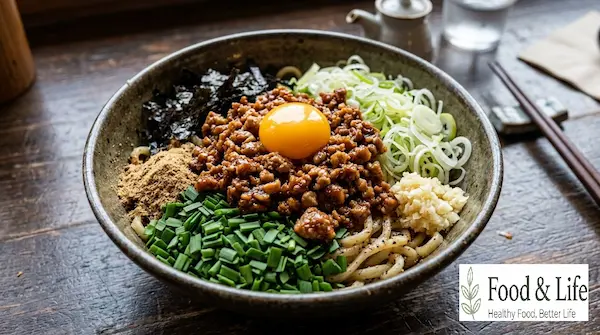
When you’re craving a rich noodle bowl without broth, Taiwan Mazesoba is a satisfying option packed with seasoned ground pork and aromatic toppings.
This Taiwan Mazesoba recipe combines spicy ground pork cooked with doubanjiang, garlic chives, green onion, fresh garlic, homemade bonito powder, and egg yolks. The Chinese-style noodles are first tossed with 2 tbsp sesame oil, 1 tsp chicken bouillon powder, and pepper so the seasonings and toppings blend evenly with every strand. Once everything is mixed together, the spicy, savory pork combines with fragrant vegetables and creamy egg yolk for a rich and layered noodle dish.
⏱️ Cooking Time: About 20 minutes
🍳 Difficulty: ★★☆☆☆
✓ Ingredients (Serves 2)
🥣 Main Ingredients
- Chinese-style wheat noodles, 2 servings
- 200 g (7 oz) ground pork
- 40 g (1.4 oz) garlic chives
- 10 cm (about 4 inches) green onion
- 4 garlic cloves
- 5 g (0.2 oz) katsuobushi (dried bonito flakes)
- 2 egg yolks
- Nori, as needed
🧂 Seasonings & Sauce
- 50 ml (1.7 fl oz) water
- 1 tbsp Cheongha
- 1 tbsp oyster sauce
- 1/2 tbsp brewed soy sauce
- 1/2 tbsp sugar
- Cooking oil, for stir-frying
- 2 tsp doubanjiang
- 2 tbsp sesame oil
- 1 tsp chicken bouillon powder
- Pepper
(Measurement guide: 1 tbsp = 15 ml, 1 tsp = 5 ml, 1 Korean paper cup = 180 ml / 6.1 fl oz)
✓ How to Make Taiwan Mazesoba
- Prep the vegetables and garlic: Finely chop 40 g (1.4 oz) garlic chives into pieces about 5 mm long. Thinly slice the 10 cm (4-inch) piece of green onion and finely mince all 4 garlic cloves.
- Make the bonito powder: Microwave 5 g (0.2 oz) katsuobushi for about 50 seconds to remove excess moisture. Crush it finely by hand until it has a powder-like texture.
- Make the pork tare: Combine 50 ml (1.7 fl oz) water, 1 tbsp Cheongha, 1 tbsp oyster sauce, 1/2 tbsp brewed soy sauce, and 1/2 tbsp sugar. Stir until the sugar is incorporated.
- Sauté the garlic: Add cooking oil to a skillet, then add 1/2 tsp of the minced garlic and heat over medium heat. Reserve the remaining minced garlic for the final topping.
- Cook the pork with doubanjiang: Add 200 g (7 oz) ground pork and break it apart with a spatula while cooking so it browns evenly. Once the pork is cooked through, add 2 tsp doubanjiang and stir-fry for another minute.
- Finish the seasoned ground pork: Pour in all of the prepared tare. Continue cooking until the pork absorbs the seasoning and most of the liquid has evaporated, leaving a crumbly, well-seasoned ground pork mixture.
- Cook the noodles: Add 2 servings of Chinese-style wheat noodles to boiling water and cook according to the package directions. Loosen the noodles while cooking so they do not clump or stick together, then drain thoroughly.
- Season the noodles: Add 2 tbsp sesame oil, 1 tsp chicken bouillon powder, and pepper to the cooked noodles. Toss well until the noodles are evenly coated and glossy.
- Assemble the noodles and toppings: Divide the seasoned noodles between 2 bowls. Arrange the garlic chives, green onion, reserved minced garlic, bonito powder, and nori over the noodles.
- Finish the Taiwan Mazesoba: Spoon the cooked ground pork over the noodles and place 1 egg yolk in the center of each bowl. Just before eating, thoroughly mix the yolk, pork, vegetables, bonito powder, and noodles until everything is evenly coated.
✓ Key Tips for Success
- Cook off enough moisture from the ground pork mixture. If too much liquid remains after adding the tare, the noodles may become watery once everything is mixed together. Continue cooking until the pork has absorbed the seasoning and very little liquid remains in the pan.
- Toss the cooked noodles thoroughly with sesame oil and chicken bouillon powder. The noodles should be evenly coated and glossy so the seasoned pork and toppings blend naturally into the noodles instead of tasting separate.
✓ Serving Tips
- Break the egg yolk just before eating and mix it thoroughly into the noodles and seasoned pork. The creamy yolk softens the spicy, savory flavor of the doubanjiang and gives the dish a richer texture.
- Instead of adding the katsuobushi whole, dry it briefly in the microwave and crush it into a fine bonito powder. This helps it distribute more evenly throughout the noodles.
- Mix the garlic chives, green onion, and fresh garlic thoroughly with the pork and noodles rather than eating each topping separately. This allows their aromas to spread evenly throughout the bowl.
✓ How to Choose Good Garlic Chives
- Leaves and firmness: Choose garlic chives with straight leaves and tips that are not dry or brown. The leaves should feel tender but still have some springiness.
- Color and appearance: Look for bunches with a deep, vibrant green color and a natural sheen, without noticeably wilted leaves.
- Stems and cut ends: Choose garlic chives with fresh-looking cut ends that are not dried out. The stems should not be excessively tough.
Source: Food Information Nuri – Seasonal Garlic Chives
✓ Garlic Chive Nutrition per 100 g (3.5 oz)
| Nutrient | Amount per 100 g (3.5 oz) |
|---|---|
| Calories | 22.00 kcal |
| Carbohydrates | 4.10 g |
| Protein | 1.80 g |
| Fat | 0.30 g |
| Sodium | 3.00 mg |
Values are based on 100 g of raw traditional-variety garlic chives. Actual nutrition may vary depending on the variety, product, and cooking method.
Source: Ministry of Food and Drug Safety Food Nutrition Database
✓ Frequently Asked Questions (FAQ)
Q1. How long should I cook the noodles for Taiwan Mazesoba?
Cook the noodles for the amount of time listed on the package. Loosen them occasionally while boiling so they do not clump or stick together.
Q2. Why is my seasoned ground pork too watery?
The liquid in the tare has not reduced enough. After adding the tare, continue cooking until the pork absorbs the seasoning and almost no liquid remains in the pan.
Q3. Do all 4 garlic cloves go into the pan with the pork?
No. Use only 1/2 tsp of the minced garlic at the beginning of cooking, and reserve the rest to use as a fresh topping over the finished noodles.
Finished Taiwan Mazesoba looks especially appetizing with glossy noodles covered in spicy ground pork and colorful toppings. The pork absorbs the doubanjiang, oyster sauce, and soy sauce, creating a savory, deeply umami flavor with a noticeable spicy edge. Garlic chives, green onion, and fresh garlic add bright aromatic notes that cut through the richness of the meat. The finely crushed bonito powder spreads throughout the noodles, adding another layer of savory flavor. Once the egg yolk is broken and mixed in, it coats the bold seasonings with a smooth, rich texture that pairs especially well with the chewy noodles.
I also enjoy noodle dishes where the sauce and toppings are mixed directly into the noodles rather than served in a large amount of broth, and I particularly liked how all the ingredients came together in this bowl. Prepping the garlic chives, green onion, garlic, and tare in advance makes the rest of the cooking process fairly straightforward: cook the pork, boil the noodles, and assemble. Tossing the cooked noodles with sesame oil and chicken bouillon powder before adding the toppings also gives the noodles themselves plenty of savory flavor. The crushed bonito powder adds extra umami between bites of the richly seasoned pork. My family especially enjoyed mixing everything thoroughly after breaking the egg yolk, which brought the spicy, savory, creamy, and aromatic flavors together in every bite. With different textures from the pork, vegetables, and chewy noodles, it is a mixed noodle dish worth making again.
If you enjoy richly seasoned pork and chewy noodles, try this Taiwan Mazesoba recipe with doubanjiang ground pork and plenty of aromatic toppings. Rather than eating each topping separately, break the egg yolk and mix everything thoroughly to enjoy the full combination of flavors.
Save or bookmark this recipe so you can easily find it again, and share it with someone who enjoys flavorful noodle dishes.
I’ll continue sharing practical recipes and useful cooking tips that are easy to follow at home. 😊
If there is a dish you would like to see next, feel free to leave a comment. 😊
※ This recipe was prepared after referring to a recipe introduced by the YouTube channel ‘일식예보’, and this post is based on the cooking process and results.