
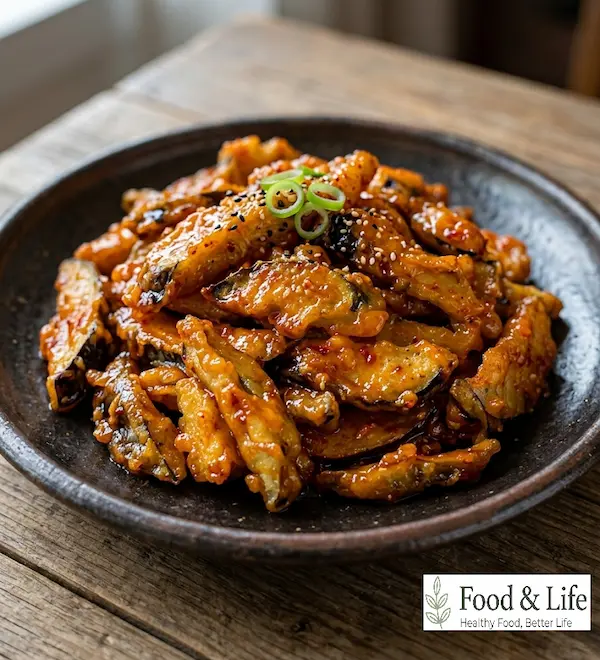
The key to making crispy Eggplant Gangjeong is to coat the eggplant in a batter made with Korean frying mix and starch, fry it twice, then turn off the heat as soon as the sweet chili sauce begins to boil and quickly toss the fried eggplant in the glaze.
Coating 2 eggplants with a batter made from 2 Korean paper cups of frying mix and 1/2 cup of starch, then frying them twice, creates Eggplant Gangjeong that is crispy on the outside while staying soft and moist inside.
The sweet and spicy glaze combines 4 tbsp sweet chili sauce, 4 tbsp Korean starch syrup (mulyeot), chili oil, and a few savory seasonings. Turning off the heat as soon as the sauce starts to boil and tossing the fried eggplant quickly helps keep the coating from becoming soggy too fast. The combination of tender eggplant, crisp batter, and a sweet-spicy glaze makes this an easy Korean eggplant dish to enjoy with rice or as a savory snack.
⏱️ Cooking Time: About 20 minutes
🍳 Difficulty: ★★☆☆☆
✓ Ingredients
🥣 Main Ingredient
- 2 eggplants (300 g / 10.6 oz)
🧂 Batter & Sauce
- 2 Korean paper cups Korean frying mix (360 ml)
- 1.7 Korean paper cups water (306 ml / about 10.3 fl oz)
- 1/2 Korean paper cup starch (90 ml)
- 4 tbsp sweet chili sauce
- 4 tbsp Korean starch syrup (mulyeot)
- 1.5 tbsp chili oil
- 1/2 tbsp minced garlic
- 1/3 tbsp gochugaru (Korean red pepper flakes)
- 1/2 tbsp oyster sauce
- 1/2 tbsp regular soy sauce
(Measurement guide: 1 tbsp = 15 ml, 1 tsp = 5 ml, 1 Korean paper cup = 180 ml)
✓ How to Make Eggplant Gangjeong
- Prepare the eggplant: Wash 2 eggplants thoroughly under running water and trim off the tops. Cut them in half lengthwise, then slice them diagonally into fairly thick pieces.
- Make the batter and coat the eggplant: Add 2 Korean paper cups of frying mix, 1.7 cups of water, and 1/2 cup of starch to a large bowl. Mix until evenly combined, then add all of the prepared eggplant and coat each piece thoroughly with the batter.
- First fry: Pour a generous amount of oil into a pan and heat it until a small drop of batter rises to the surface immediately. Add the battered eggplant pieces one at a time and fry briefly until the outer coating sets. Remove from the oil.
- Second fry: Return the fried eggplant to the hot oil and fry again until the coating becomes crisp and develops an appetizing golden-brown color. Remove and drain off the excess oil.
- Cook the Gangjeong sauce: Add 4 tbsp sweet chili sauce, 4 tbsp Korean starch syrup, 1.5 tbsp chili oil, 1/2 tbsp minced garlic, 1/3 tbsp gochugaru, 1/2 tbsp oyster sauce, and 1/2 tbsp regular soy sauce to a pan. Heat the sauce and turn off the heat immediately once it begins to boil.
- Toss with the sauce: Add the twice-fried eggplant directly to the sauce in the pan with the heat turned off. Toss quickly until every piece is evenly coated, then serve.
✓ Key Tips for Success
- Add starch and fry twice: Eggplant contains plenty of moisture, so the coating can quickly become soft if it is fried only once. Mixing starch into the batter and frying the eggplant twice until golden brown helps the exterior stay crisp for longer.
- Turn off the heat as soon as the sauce boils: If the Gangjeong sauce is cooked for too long, it can become overly thick and hard, while the fried coating can lose its crispness more quickly. As soon as the sauce starts bubbling, turn off the heat and toss the eggplant quickly using only the residual heat.
✓ Serving Tips
- Sprinkle chopped peanuts or toasted sesame seeds over the finished Gangjeong for extra nutty flavor and a crunchy texture.
- The sweet, spicy, and savory glaze pairs well with warm rice. It also works nicely as a snack with a cold beer or a carbonated drink.
✓ How to Choose Fresh Eggplant
- Shape and surface: Choose eggplants with an even shape typical of the variety and smooth skin without scratches, damaged areas, or wrinkles.
- Color and shine: Look for a deep, vivid dark-purple color, a glossy surface, and even coloring throughout.
- Firmness and stem: The eggplant should feel firm and springy when gently pressed. Look for a fresh-looking stem end and sharp, well-defined points around the calyx.
Source: Rural Development Administration Nongsaro Agricultural Technology Portal
✓ Eggplant Nutrition per 100 g (3.5 oz)
| Nutrient | Amount per 100 g (3.5 oz) |
|---|---|
| Calories | 19.00 kcal |
| Carbohydrates | 4.36 g |
| Protein | 1.13 g |
| Fat | 0.03 g |
| Sodium | 0.00 mg |
Values are based on 100 g (3.5 oz) of raw eggplant. Actual nutrition may vary depending on the variety, part used, product, and cooking method.
Source: Korean Ministry of Food and Drug Safety Food Nutrition Database
✓ Frequently Asked Questions (FAQ)
Q1. Why do you fry the eggplant twice?
Eggplant contains a lot of moisture. The first fry sets the batter, while the second fry in hot oil helps the outside become crisp and keeps the coating from softening as quickly.
Q2. Why does the fried eggplant become soggy so quickly after I add the sauce?
This usually happens when the sauce is reduced for too long over the heat or when the eggplant is tossed while the burner is still on. Turn off the heat as soon as the sauce begins to boil, then quickly toss the fried eggplant in the residual heat to help preserve its crisp texture.
Q3. Do I really need to add starch to the batter?
Mixing starch with the frying mix helps the coating stay crisp even after it is glazed with the sauce. It also gives the batter a slightly chewy yet crisp texture that works especially well for Gangjeong.
When I made this recipe with starch in the batter and fried the eggplant twice, the coating stayed thin and crisp while the inside remained soft and moist.
The sweetness of the sweet chili sauce and Korean starch syrup pairs well with the gentle heat from the chili oil and gochugaru. Turning off the heat as soon as the sauce started boiling and tossing the eggplant quickly allowed the glaze to coat each piece evenly while still preserving the crisp texture of the fried batter.
If your fried eggplant tends to become soggy as soon as you toss it with sauce, try this Eggplant Gangjeong recipe: mix starch into the batter, fry the eggplant twice, and toss it quickly in the sauce after turning off the heat. It is a great way to enjoy eggplant with a crispy outside and soft, moist center, offering a completely different texture from stir-fried or seasoned eggplant dishes.
Save or bookmark this recipe so you can easily find it again, and share it with someone who enjoys Korean food.
I’ll continue sharing easy-to-follow recipes and practical cooking tips. 😊
If there is a dish you would like to see next, feel free to leave a comment. 😊