
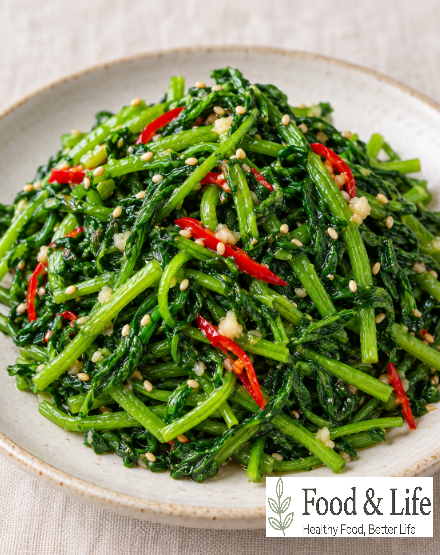
When you want a fresh and aromatic Korean vegetable side dish, minari muchim (seasoned Korean water parsley) is a simple choice with plenty of texture.
The key to this minari muchim recipe is blanching the firmer stems for 30 seconds first, then adding the tender leaves and cooking them for another 40 seconds. This helps the stems and leaves cook evenly without leaving the stems tough or making the leaves overly soft. After blanching, the minari is immediately rinsed in cold water, squeezed well, and lightly seasoned with soup soy sauce, seasoned salt, garlic, sesame oil, and sesame seeds to preserve its distinctive fresh aroma.
The crisp stems, tender leaves, and nutty sesame oil make this an easy Korean side dish that pairs especially well with rice or grilled meat.
⏱️ Cooking Time: About 15 minutes
🍳 Difficulty: ★☆☆☆☆
✓ Ingredients
🥣 Main Ingredients
- 400 g (14.1 oz) minari (Korean water parsley)
- 2 red chili peppers
🧂 Seasonings
- 1 tbsp salt, for blanching the minari
- 1 tbsp soup soy sauce
- 1/3 tbsp seasoned salt
- 1 tbsp minced garlic
- 2 tbsp sesame oil
- 1 tbsp sesame seeds
(Measurement guide: 1 tbsp = 15 ml (0.5 fl oz), 1 tsp = 5 ml (0.17 fl oz), 1 Korean paper cup = 180 ml (6.1 fl oz))
✓ How to Make Minari Muchim
- Trim and wash the minari: Trim a small amount from the bottom ends of 400 g (14.1 oz) minari. Rinse thoroughly under running water about 3 times to remove any dirt or debris.
- Separate the stems and leaves: Cut the washed minari once around the middle to roughly separate the firmer stems from the more tender leafy portion.
- Blanch the stems: Bring a large pot of water to a boil and add 1 tbsp salt. Add the thick, firm stems first and blanch for 30 seconds.
- Add the leaves: Add the remaining leafy portion to the same pot and blanch everything together for another 40 seconds.
- Rinse and remove excess moisture: Immediately rinse the blanched minari under cold water until completely cooled. Squeeze out as much water as possible with your hands, then cut into bite-size pieces.
- Season and toss: Place the prepared minari and 2 thinly sliced red chili peppers in a large bowl. Add 1 tbsp soup soy sauce, 1/3 tbsp seasoned salt, 1 tbsp minced garlic, 2 tbsp sesame oil, and 1 tbsp sesame seeds. Gently toss until evenly seasoned.
✓ Key Tips for Success
- Blanch the stems and leaves at different times: Minari stems are firmer than the leaves. If everything goes into the pot at once, the stems may remain tough or the leaves may become overly soft. Blanch the stems for 30 seconds first, then add the leaves and cook for another 40 seconds for a more evenly crisp texture.
- Remove as much moisture as possible and season lightly: If the blanched minari is not squeezed thoroughly, excess water can collect after seasoning and dilute the flavors. Minari can also taste salty with only a small amount of seasoning, so squeeze it well and keep the seasoning light to preserve its fresh flavor.
✓ Serving Tips
- Serve minari muchim alongside grilled pork belly, thinly sliced beef brisket, or other richly flavored grilled meats for a fresh contrast.
- Add it to freshly cooked rice with 1 tbsp gochujang, a small drizzle of sesame oil, and a fried egg to make a simple bibimbap-style rice bowl.
- Keep the seasoning mild to enjoy the naturally fresh aroma and crisp texture of minari almost like a seasoned vegetable salad.
✓ How to Choose Fresh Minari
- Check the stems: Look for stems that are not overly thick, feel smooth and tender, and have evenly spaced nodes.
- Look at the leaves: Choose minari with vivid dark-green leaves that look glossy, without dried tips or yellow discoloration.
- Check the cut ends: When possible, choose stems that look moist and full inside rather than dry or hollow at the cut ends.
✓ Minari Nutrition per 100 g (3.5 oz)
| Nutrient | Amount per 100 g (3.5 oz) |
|---|---|
| Calories | 16.00 kcal |
| Carbohydrates | 2.74 g |
| Protein | 1.90 g |
| Fat | 0.16 g |
| Sodium | 4.00 mg |
Based on 100 g of raw minari (dolminari). Actual nutrition values may vary depending on the variety, part of the plant, product, and cooking method.
Source: Ministry of Food and Drug Safety Food Nutrition Database – Raw Food Ingredients
✓ Frequently Asked Questions (FAQ)
Q1. Why should I blanch the minari stems before the leaves?
Minari stems are firmer while the leaves are thin and tender. Blanching the stems for 30 seconds first and then adding the leaves for another 40 seconds helps everything cook evenly while keeping the stems crisp and preventing the leaves from becoming too soft.
Q2. Why does water collect at the bottom after I season minari muchim?
This usually happens when the blanched minari was not squeezed thoroughly enough or when the seasoned minari sits for too long and releases more moisture. Squeeze out as much water as possible after blanching and toss with the seasonings shortly before serving.
Following the blanching times in this recipe gave the minari a nicely balanced texture: the stems stayed crisp without being tough, while the leaves remained tender without becoming overly soft. The soup soy sauce and seasoned salt provided a light savory flavor that did not overpower the fresh aroma of the minari, while the sesame oil and sesame seeds added a gentle nutty finish.
Because the entire dish takes only about 15 minutes, this easy minari muchim recipe is a convenient option whenever you need a quick Korean vegetable side dish. If you want to enjoy minari at its best, try blanching the stems and leaves in two stages exactly as described above.
Save or bookmark this recipe so you can easily find it again, and share it with anyone who enjoys simple Korean side dishes.
More easy-to-follow recipes and practical cooking tips will be coming soon. If there is a dish you would like to see featured, feel free to leave a comment. 😊