
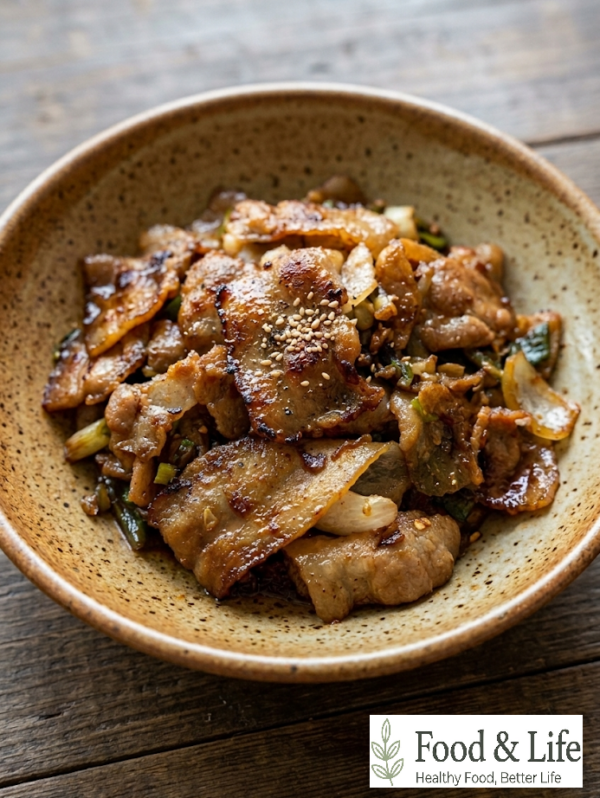
If you want a different way to enjoy thin-sliced frozen pork belly, try stir-frying it in a sweet and savory Korean galbi-style sauce.
This galbi-style pork belly stir-fry starts by reducing a sauce made with soy sauce, oyster sauce, and pear juice until thick, then adding 250 g (8.8 oz) of thin-sliced pork belly and stir-frying it until well browned. Reducing the sauce first is key: it prevents the thin pork from steaming in excess liquid and helps the rich galbi-style glaze cling tightly to the meat.
With savory umami, gentle sweetness, and the spicy kick of Cheongyang chili, this quick pork dish is perfect with steamed rice or as an easy appetizer with drinks.
⏱️ Cooking Time: About 15 minutes
🍳 Difficulty: ★★☆☆☆
✓ Ingredients
🥣 Main Ingredients
- 250 g (8.8 oz) thin-sliced pork belly
- 20 g (0.7 oz) onion
- 20 g (0.7 oz) green onion
- 1 Cheongyang chili pepper, 10 g (0.4 oz)
🧂 Sauce & Seasonings
- 2 tbsp regular soy sauce
- 1/2 tbsp oyster sauce
- 1 tbsp sugar
- 2 tbsp cooking wine
- 1 tbsp minced garlic
- 1/3 Korean paper cup pear juice (Gal-a-man-deun Bae), about 60 ml (2 fl oz)
- A little black pepper
(Measurement guide: 1 tbsp = 15 ml, 1 tsp = 5 ml, 1 Korean paper cup = 180 ml / 6.1 fl oz)
✓ How to Make Galbi-Style Pork Belly Stir-Fry
- Prepare the vegetables: Finely chop 20 g (0.7 oz) onion, 20 g (0.7 oz) green onion, and 1 Cheongyang chili pepper.
- Mix the sauce: In a bowl, combine 2 tbsp regular soy sauce, 1/2 tbsp oyster sauce, 1 tbsp sugar, 2 tbsp cooking wine, 1 tbsp minced garlic, and 1/3 cup pear juice (60 g). Add the chopped onion, green onion, and Cheongyang chili, then mix well.
- Reduce the sauce: Pour the entire sauce mixture into a skillet and bring it to a simmer over medium heat. Continue reducing until the sauce is thick enough that dragging a spoon across the bottom of the skillet leaves a clear trail.
- Add the pork: Add 250 g (8.8 oz) thin-sliced pork belly to the reduced sauce. Add about three light shakes of black pepper, then stir-fry over medium-high heat, turning the meat as it cooks.
- Cook until caramelized: Continue stir-frying until the sauce no longer sits separately in the pan and coats the pork thoroughly. Cook a little longer until the soy-based sauce lightly caramelizes against the bottom of the skillet, then remove from the heat.
✓ Key Tips for Success
- Reduce the sauce before adding the pork: Because the sauce contains pear juice, it has a relatively high moisture content. If you add thin-sliced pork belly from the beginning, the meat can steam or boil instead of browning. Reduce the sauce first until thick enough to expose the bottom of the skillet, then add the pork so the rendered fat and sauce coat the meat properly.
- Finish with caramelization: Do not turn off the heat as soon as the pork is cooked and still pale. Continue cooking until the soy-based glaze lightly sticks and caramelizes on the bottom of the skillet. This creates a deeper roasted aroma and the sticky sweet-and-savory flavor associated with galbi-style seasoning.
✓ Serving Tips
- Spoon a generous amount of the galbi-style pork belly over freshly cooked rice and top with thinly sliced green onion or scallions for an easy Korean pork rice bowl.
- Serve the pork as lettuce wraps with fresh perilla leaves or lettuce and pickled radish wraps for a balance of rich and refreshing flavors.
- If you prefer more heat, add a little extra sliced Cheongyang chili as a garnish before serving.
✓ How to Choose Good Pork Belly
- Meat and fat color: Look for pork with bright reddish or light pink lean meat and a fresh sheen. The fat should be white and firm rather than yellowish.
- Balance of meat and fat: Choose pork belly with relatively even layers of lean meat and fat rather than a very thick layer of fat concentrated on one side.
Source: Rural Development Administration Agricultural Video
✓ Pork Belly Nutrition per 100 g (3.5 oz)
| Nutrient | Amount per 100 g (3.5 oz) |
|---|---|
| Calories | 372.00 kcal |
| Carbohydrates | 0.00 g |
| Protein | 13.90 g |
| Fat | 33.31 g |
| Sodium | 56.00 mg |
Values are based on 100 g of raw pork belly. Actual nutrition may vary depending on the breed, cut, product, and cooking method.
Source: Ministry of Food and Drug Safety Food Nutrition Database
✓ Frequently Asked Questions (FAQ)
Q1. Do I need to thaw frozen thin-sliced pork belly before cooking it?
No. Because the pork slices are very thin, you can add them directly from frozen to the reduced sauce and stir-fry until tender and fully cooked.
Q2. Why does the pork release so much water and the sauce fail to coat the meat?
This usually happens when the high-moisture sauce is not reduced before the pork is added. Cook the sauce first until it becomes thick and the bottom of the skillet is visible, then add the pork and stir-fry over high heat until the glaze clings to the meat.
Q3. Can I use bottled galbi marinade or another juice instead of pear juice?
You can substitute the same amount of apple juice for a naturally sweet flavor. However, pear juice gives the soy-based sauce the light sweetness and savory balance characteristic of this version.
Reducing the sauce thoroughly before adding the thin-sliced pork belly creates a thick, sweet-and-savory galbi-style glaze that coats the meat instead of pooling in the pan. Letting the sauce lightly caramelize at the end adds a deeper roasted aroma, while the Cheongyang chili provides a spicy contrast to the rich pork.
If you want to turn everyday frozen thin-sliced pork belly into a flavorful Korean rice side dish, try this galbi-style pork belly stir-fry recipe. With a cooking time of about 15 minutes, it is also convenient for a quick weeknight meal or a simple appetizer with drinks.
Save or bookmark this recipe for later, and share it with someone who enjoys Korean food.
More easy-to-follow recipes and practical cooking tips are coming soon. 😊
If there is a dish you would like to see featured next, feel free to leave a comment. 😊