
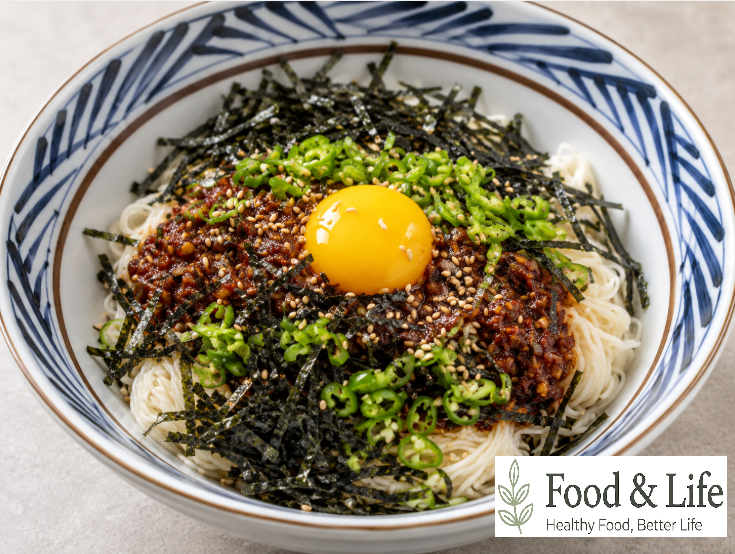
When you’re craving a flavorful noodle dish without a long list of ingredients, these spicy soy sauce bibim noodles make an easy meal. Thin Korean somyeon noodles are tossed with a savory soy sauce dressing made with tuna extract seasoning, vinegar, gochugaru, garlic, and sesame oil, then topped with spicy Cheongyang peppers. Breaking the egg yolk into the noodles adds a rich, creamy texture that mellows the heat and brings all the flavors together.
Once the noodles are cooked, this simple bowl comes together in about 10 minutes, making it especially convenient for a quick lunch or late-night meal.
⏱️ Cooking Time: About 10 minutes
🍳 Difficulty: ★☆☆☆☆
✓ Ingredients
🥣 Main Ingredients
- 200 g (7.1 oz) somyeon (Korean thin wheat noodles)
- 2 Cheongyang peppers (spicy Korean chili peppers)
- 2 egg yolks
- Shredded roasted seaweed, as needed
🧂 Sauce & Seasonings
- 3 tbsp brewed soy sauce
- 1 tbsp tuna extract seasoning
- 1 tbsp vinegar
- 1 tbsp sugar
- 1 tbsp gochugaru (Korean red pepper flakes)
- 1 tbsp minced garlic
- 1 tbsp sesame oil
- Sesame seeds, as needed
- Ground black pepper, to taste
(Measurement guide: 1 tbsp = 15 ml, 1 tsp = 5 ml, 1 Korean paper cup = 180 ml / 6.1 fl oz)
✓ How to Make Spicy Soy Sauce Bibim Noodles
- Make the sauce: In a bowl, combine 3 tbsp brewed soy sauce, 1 tbsp tuna extract seasoning, 1 tbsp vinegar, 1 tbsp sugar, 1 tbsp gochugaru, 1 tbsp minced garlic, 1 tbsp sesame oil, a little black pepper, and sesame seeds. Mix well until the sugar dissolves.
- Prepare the peppers: Remove the stems from the Cheongyang peppers and slice them thinly into rounds.
- Cook the somyeon: Add the noodles to boiling water and cook for about 3–3 1/2 minutes. When the water foams up, adding a little cold water once or twice helps keep the noodles pleasantly chewy.
- Rinse the noodles: Immediately transfer the cooked somyeon to cold water and rinse thoroughly, rubbing the noodles gently between your hands. Washing away the surface starch helps prevent a gummy texture and keeps the noodles springy.
- Assemble the noodles: Drain the somyeon very thoroughly and place it in serving bowls. Pour the prepared sauce over the noodles, then top with the sliced Cheongyang peppers, shredded roasted seaweed, and egg yolks.
✓ Key Tips for Success
- Rinse and drain the noodles thoroughly: Rinse the cooked somyeon several times in cold water while gently rubbing the strands, then squeeze or drain out as much water as possible. Excess water will dilute the sauce and prevent it from coating the noodles properly.
✓ Serving Tips
- Reduce the heat if needed: If Cheongyang peppers are too spicy for you, remove the seeds before slicing them. You can also serve the noodles with julienned cucumber for extra crunch and a milder bite.
- Mix in the egg yolk before eating: Break the egg yolk and toss it thoroughly with the noodles and sauce. It adds a rich, silky texture that softens the spicy, salty flavor of the dressing.
✓ How to Choose Good Somyeon Noodles
- Appearance and color: Choose noodles with an even, creamy-white color rather than a dull or uneven appearance. Look for packages with minimal broken pieces or loose noodle powder.
- Dryness and texture: The strands should be straight and relatively uniform in thickness. Properly dried somyeon should feel firm and dry rather than soft or damp.
- Storage and aroma: The noodles should smell clean and grain-like, without rancid or musty odors. Check that the package has been properly sealed and stored in a cool, dry place.
✓ Somyeon Nutrition per 100 g (3.5 oz)
| Nutrient | Amount per 100 g (3.5 oz) |
|---|---|
| Calories | 370.00 kcal |
| Carbohydrates | 74.88 g |
| Protein | 10.36 g |
| Fat | 1.27 g |
| Sodium | 1,274.00 mg |
Based on 100 g (3.5 oz) of dried somyeon noodles. Actual nutrition may vary depending on the product and cooking method.
Source: Ministry of Food and Drug Safety Food Nutrition Database – Raw Food Ingredients
✓ Frequently Asked Questions (FAQ)
Q1. How long should I cook somyeon for a chewy texture?
Add the noodles once the water is at a full boil and cook for about 3–3 1/2 minutes. When the water begins to foam up, add about 1/2 cup of cold water up to twice to create a temperature change that helps the noodles stay springy.
Q2. Why does the sauce taste weak and watery after I mix it with the noodles?
The noodles probably still contain too much water after rinsing. Drain them thoroughly and gently press out as much moisture as possible before adding the sauce so the seasoning stays concentrated and coats the noodles evenly.
Q3. What can I use instead of tuna extract seasoning?
You can substitute 1 tbsp tsuyu or 1/2 tbsp kkanaeri aekjeot (Korean sand lance fish sauce) to adjust the savory flavor and saltiness of the soy sauce dressing.
Chewy somyeon noodles tossed with a savory soy sauce dressing and spicy Cheongyang peppers make these spicy soy sauce bibim noodles salty, tangy, and pleasantly spicy without requiring complicated preparation. Break the egg yolk over the noodles and mix everything together for a richer, creamier flavor that softens the heat.
This quick noodle dish works especially well for an easy lunch or late-night meal when you want something flavorful without spending much time in the kitchen.
Save or bookmark this recipe for the next time you’re craving quick Korean noodles, and share it with someone who enjoys simple spicy noodle dishes.
More easy-to-follow recipes and practical cooking tips will continue to be shared here. 😊
If there’s a dish you’d like to learn how to make or a recipe you want to see next, feel free to leave a comment. 😊